Letterboxd Live
2024 — 2025Interaction Design · UX Research · SwiftUI Engineering · Self-Perception Theory
A three-part capstone that reimagines Letterboxd as a bridge between digital reflection and in-person cinema rituals — turning filmgoing into a communal lifestyle experience. Grounded in Self-Perception Theory, the project spans research, design, and engineering to prove that behaviour-driven design can reinforce cinephile identity and drive real-world cinema attendance.

Cinema is Disappearing from the Digital Ritual
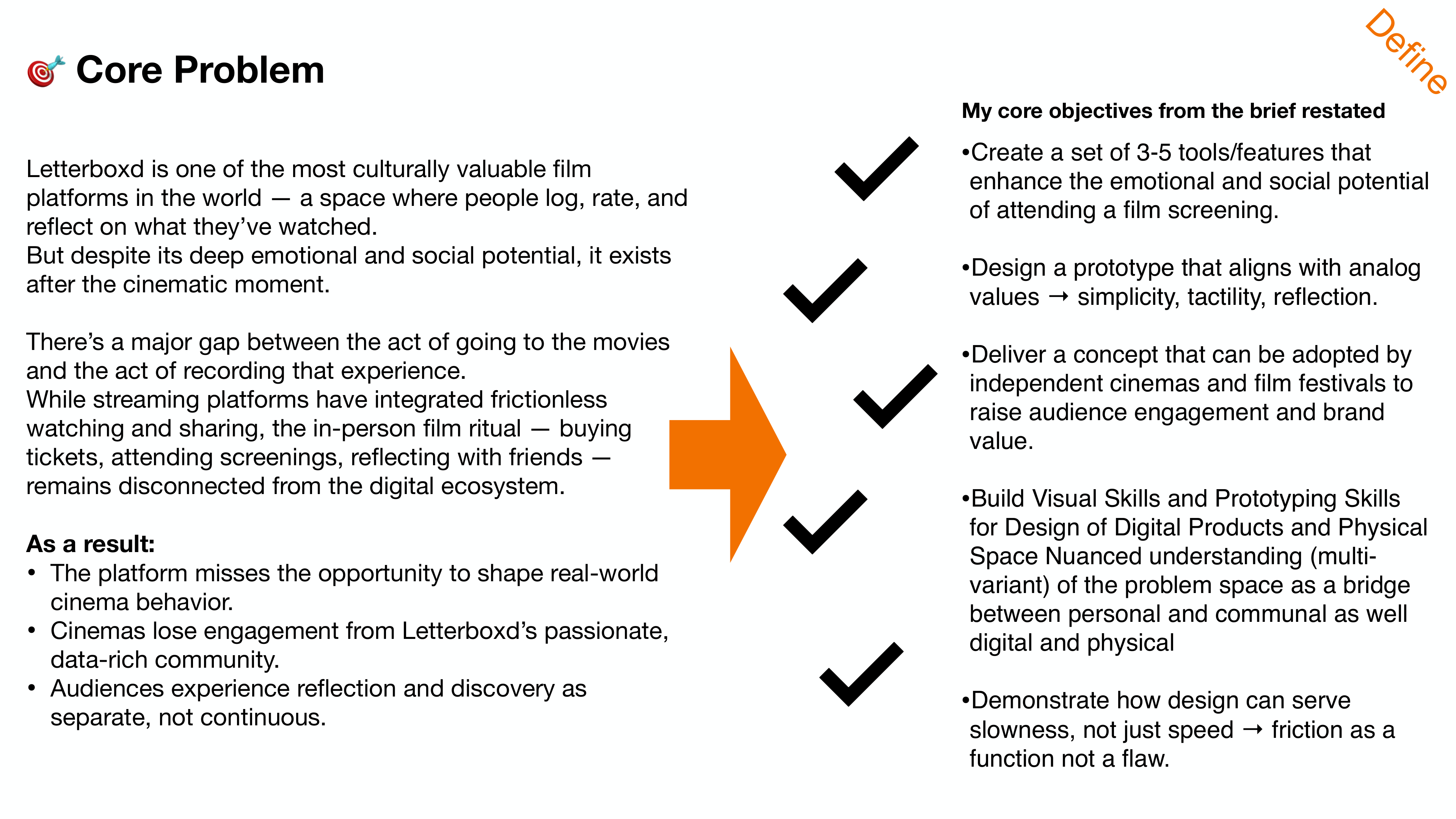
Letterboxd is one of the most culturally valuable film platforms in the world — a space where people log, rate, and reflect on what they've watched. But despite its deep emotional and social potential, it exists after the cinematic moment.
There's a major gap between the act of going to the movies and the act of recording that experience. While streaming platforms have integrated frictionless watching and sharing, the in-person film ritual — buying tickets, attending screenings, reflecting with friends — remains disconnected from the digital ecosystem.
As a result, the platform misses the opportunity to shape real-world cinema behaviour. Cinemas lose engagement from Letterboxd's passionate, data-rich community. And audiences experience reflection and discovery as separate, not continuous.
"Make cinema feel personal again."Design Vision — Letterboxd Live
Inspired by the emotional tactility of vintage ticketing, the ritual of commitment (calendar adds), and the social reinforcement of shared taste, this project aims to create a system where digital actions lead to real-life meaning. Not just a film log, but the Strava for cinema: an app that builds cultural identity, community belonging, and third-place activity through experiential UX.
Cinephile as Self: The Psychology of Identity
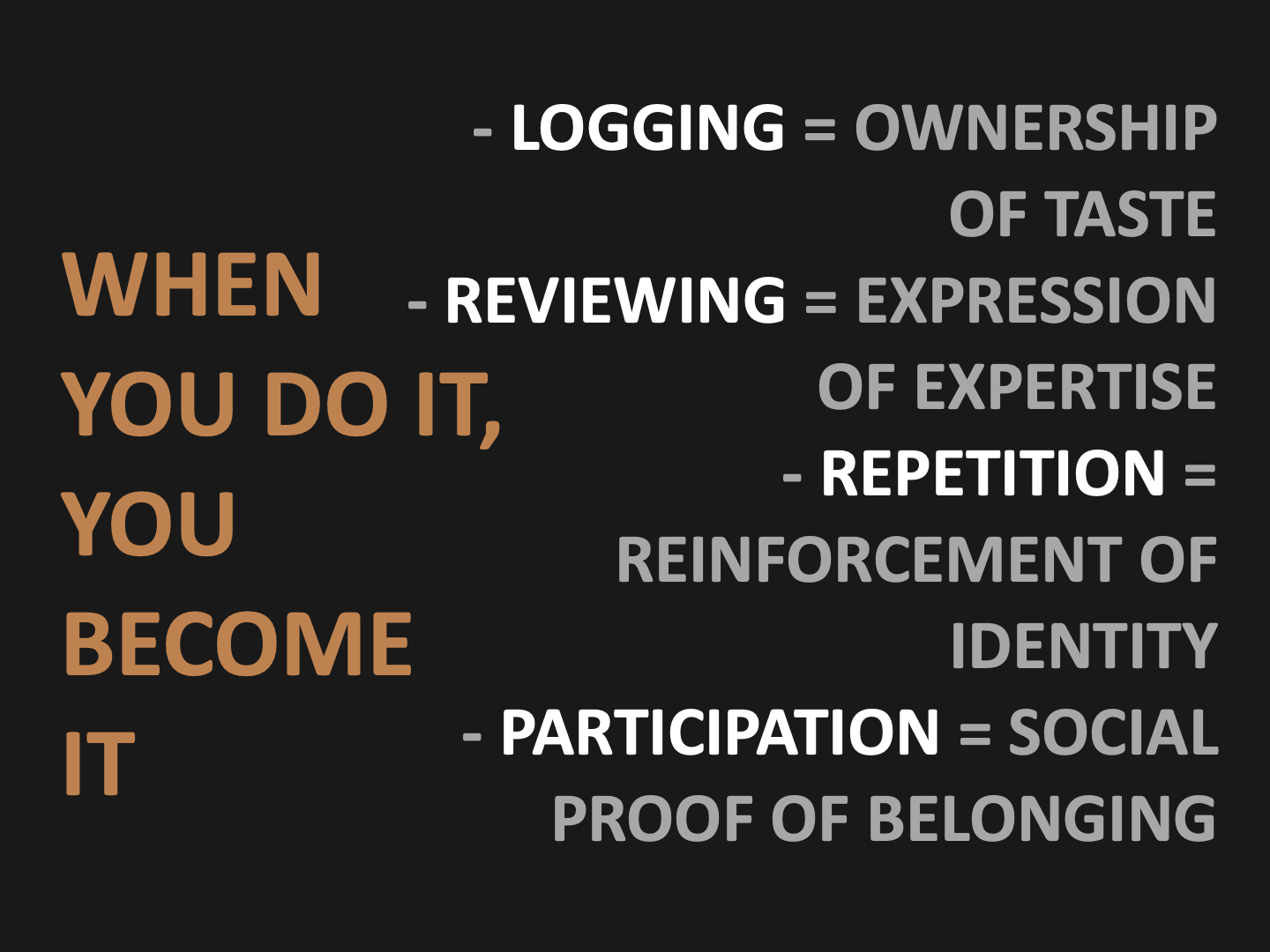
The project is grounded in Self-Perception Theory (SPT) — Daryl Bem's framework (1967) that proposes individuals come to know their own attitudes and emotions by observing their own behaviour. Applied to interaction design, this means: if the system makes you act like a cinephile, you begin to believe you are one.
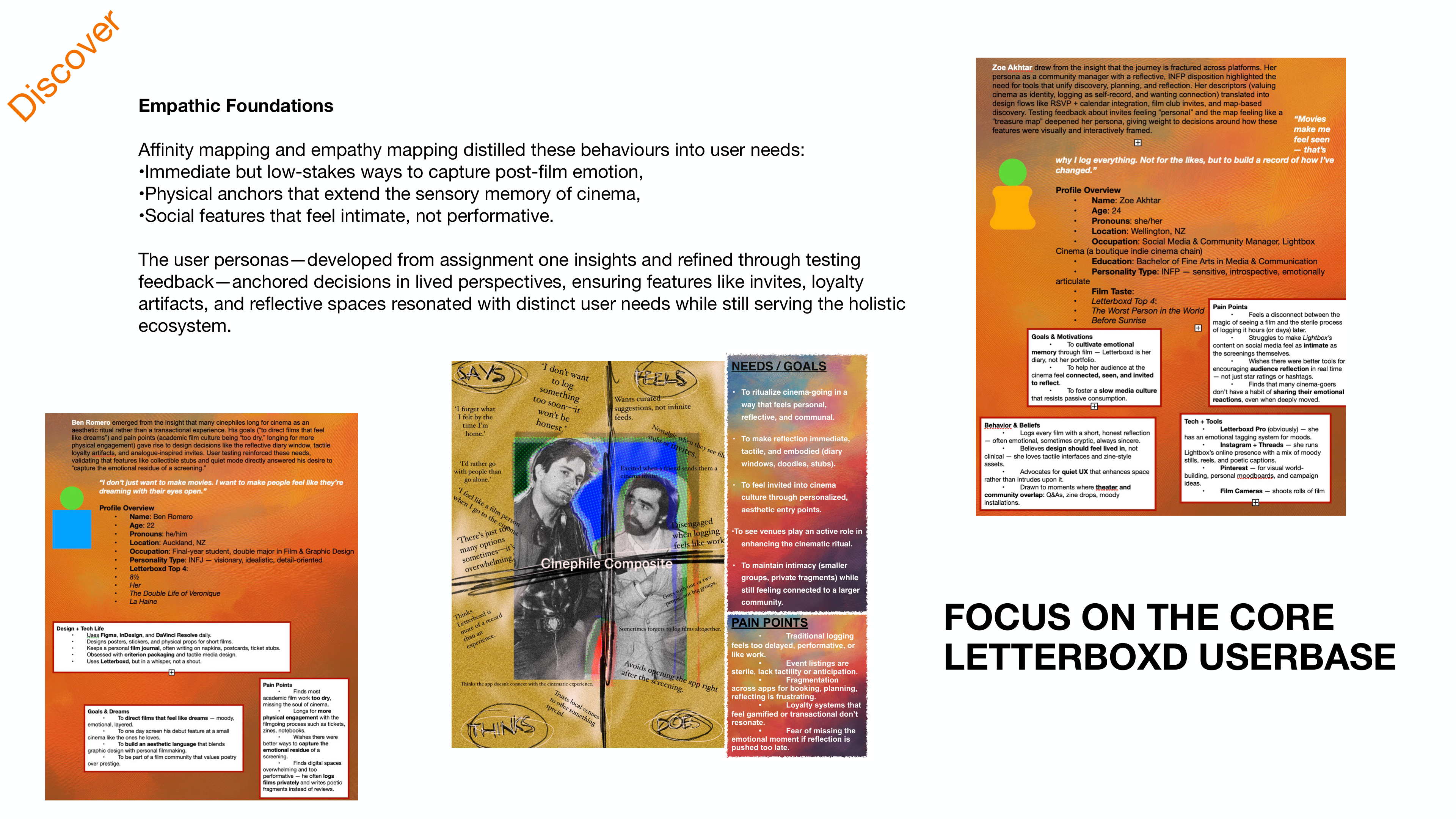
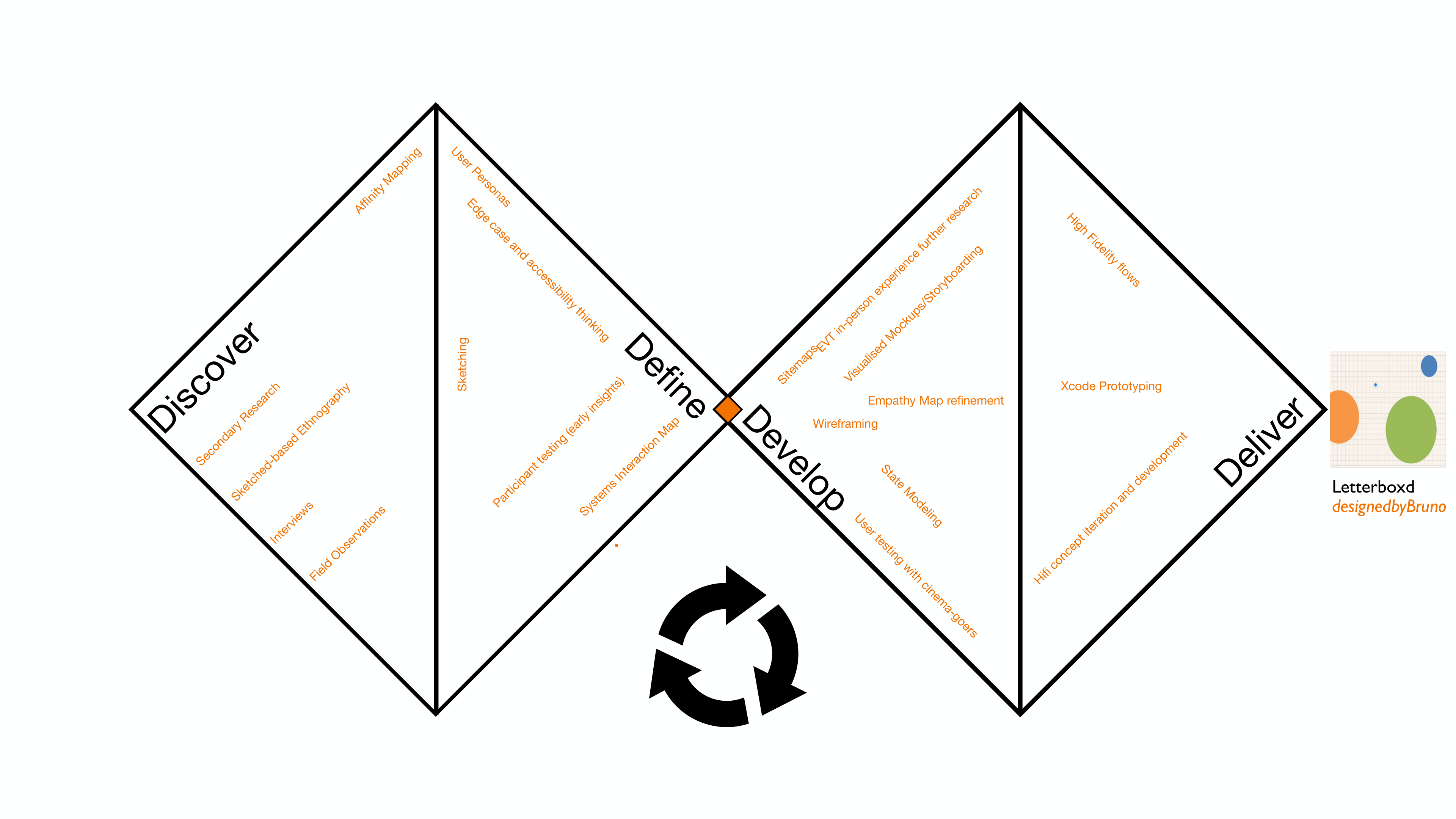
Part 1 established this theoretical foundation through secondary research, rapid ethnography, sketchbook-based field observations, interviews, and affinity mapping. The research surfaced a multi-variant problem space spanning the personal, communal, digital, and physical dimensions of cinema culture.
Research Methods
- Secondary Research
- Rapid Ethnography
- Sketchbook-based Fieldwork
- Interviews
- Affinity Mapping
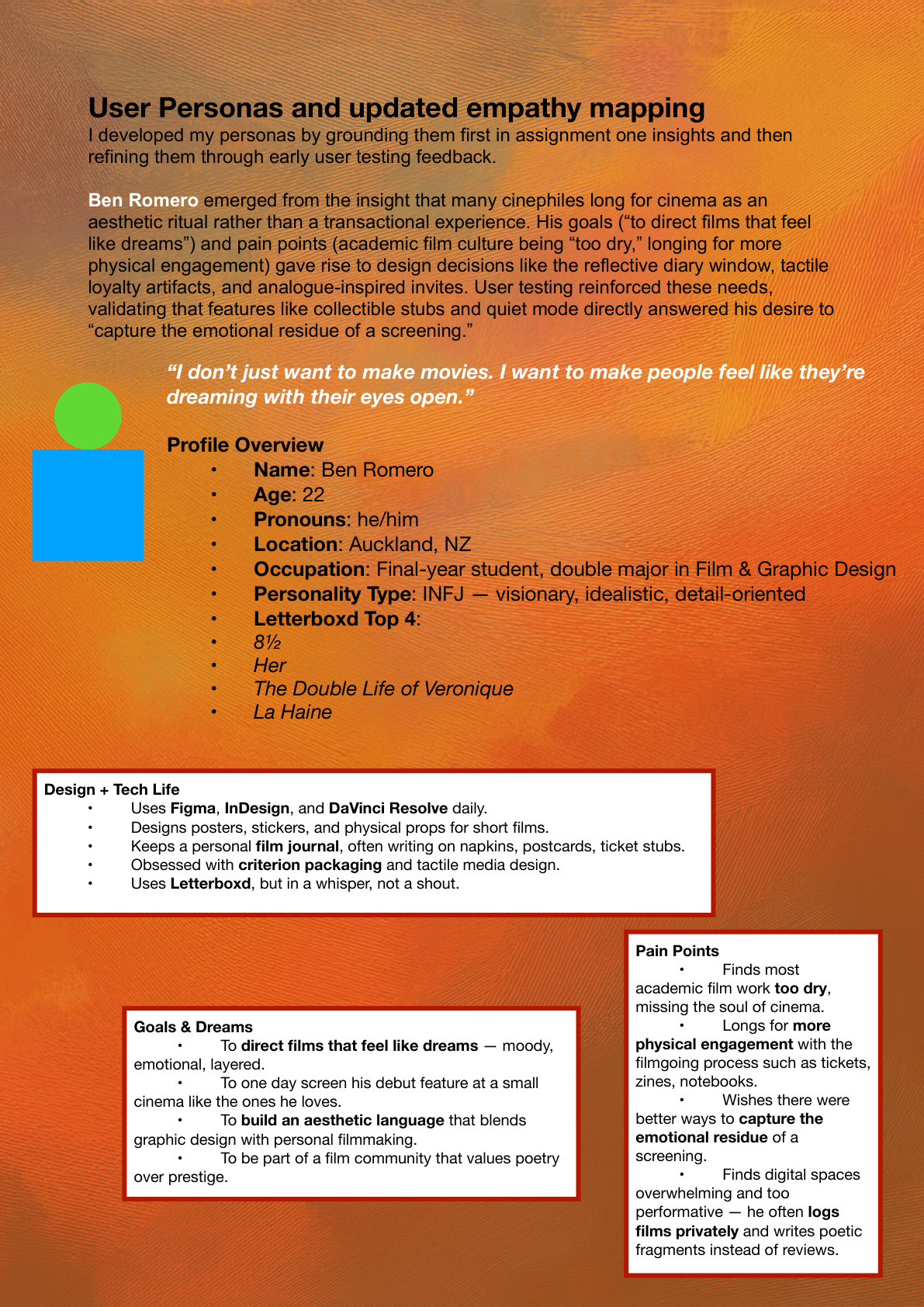
- User Personas
- Empathy Mapping
- Edge Case Analysis
- Literature Review (SPT)
- Stakeholder Analysis
- Field Observations
- Accessibility Thinking
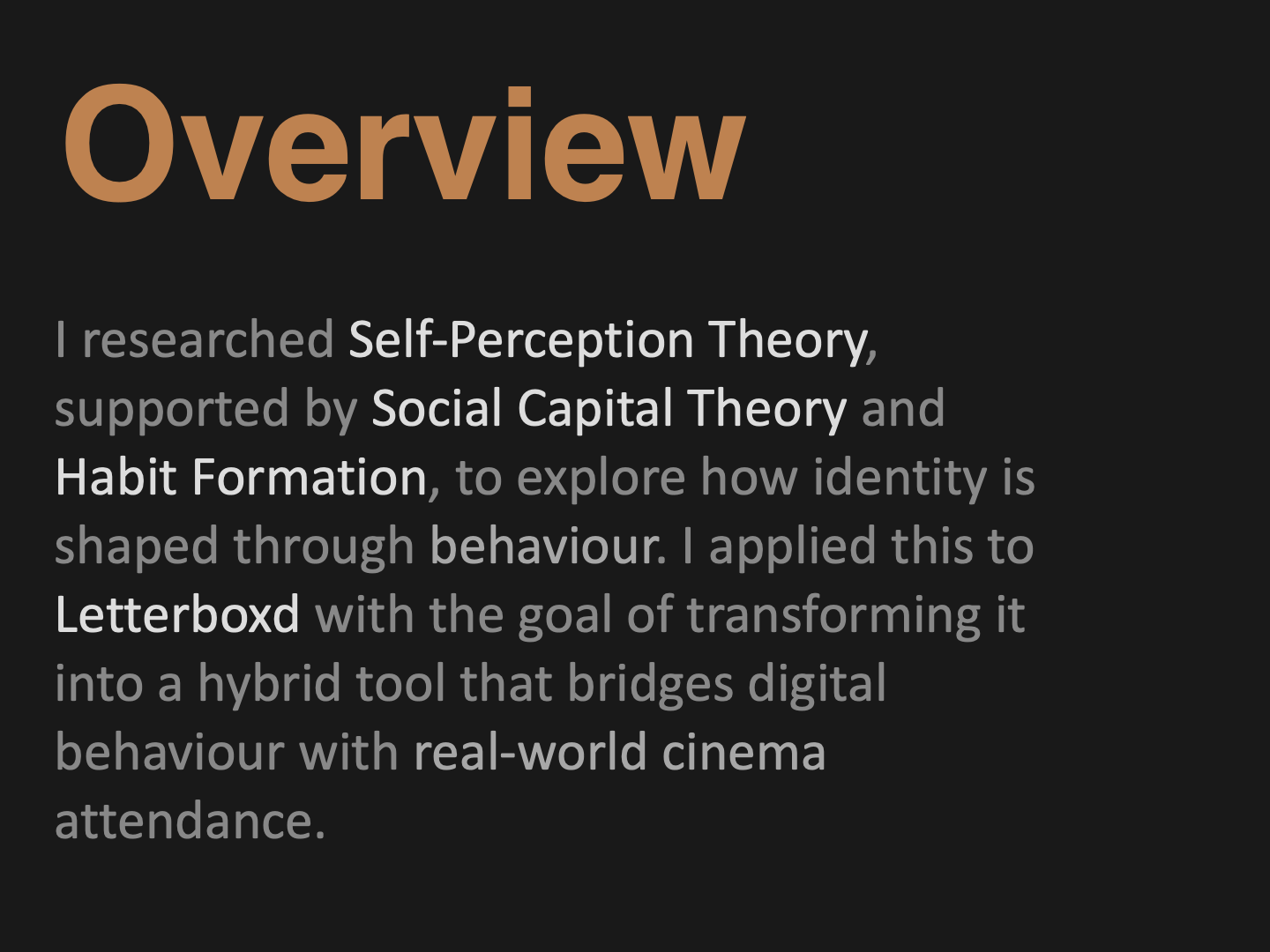
Self-Perception Theory and Letterboxd: The Art and Science of Becoming, a Cinephile
Literature review examining how SPT, Dissonance Theory, and behavioural psychology can inform design practice — establishing the theoretical framework that underpins every design decision in the project.
Systems Thinking & Interaction Architecture
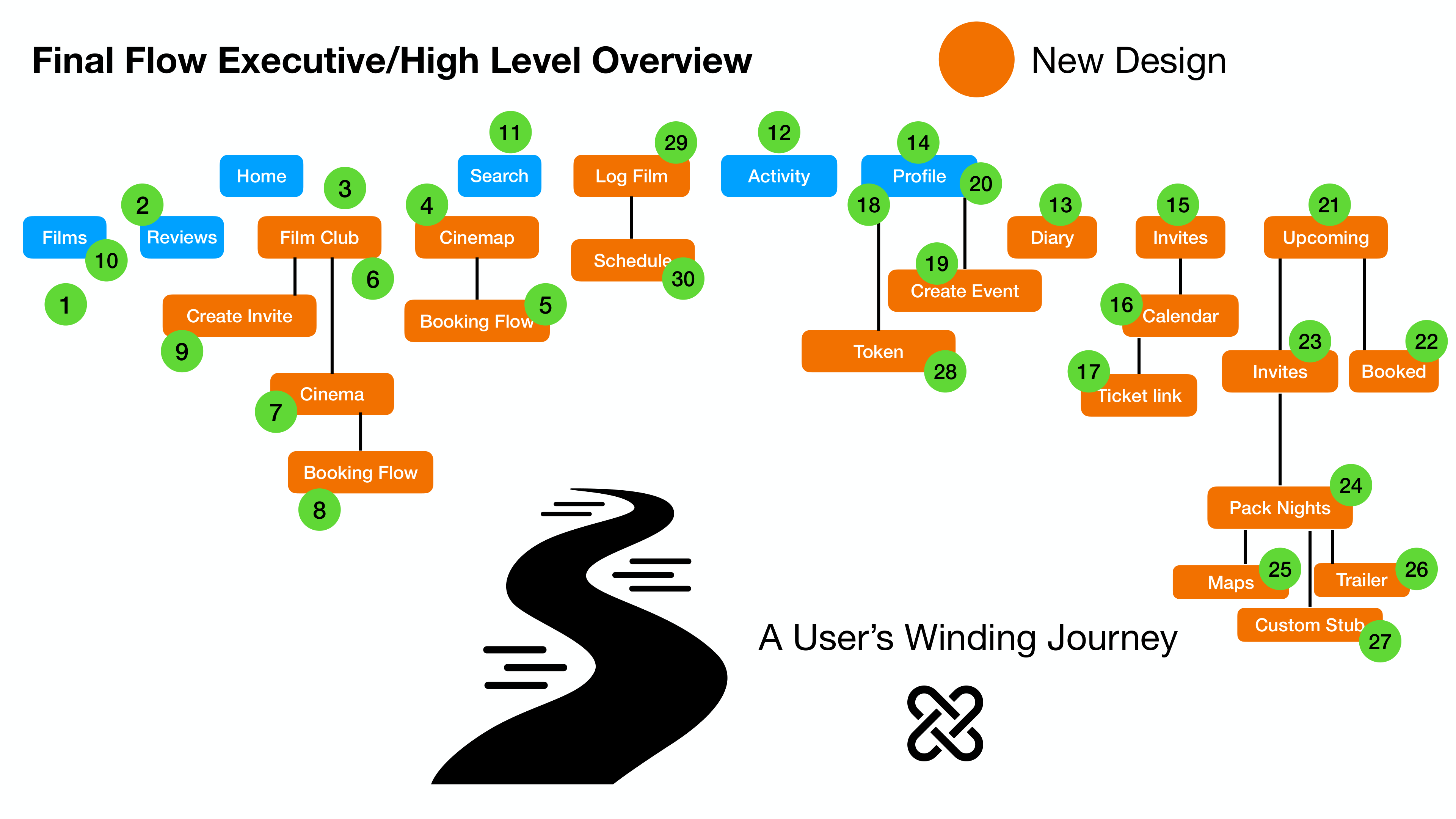
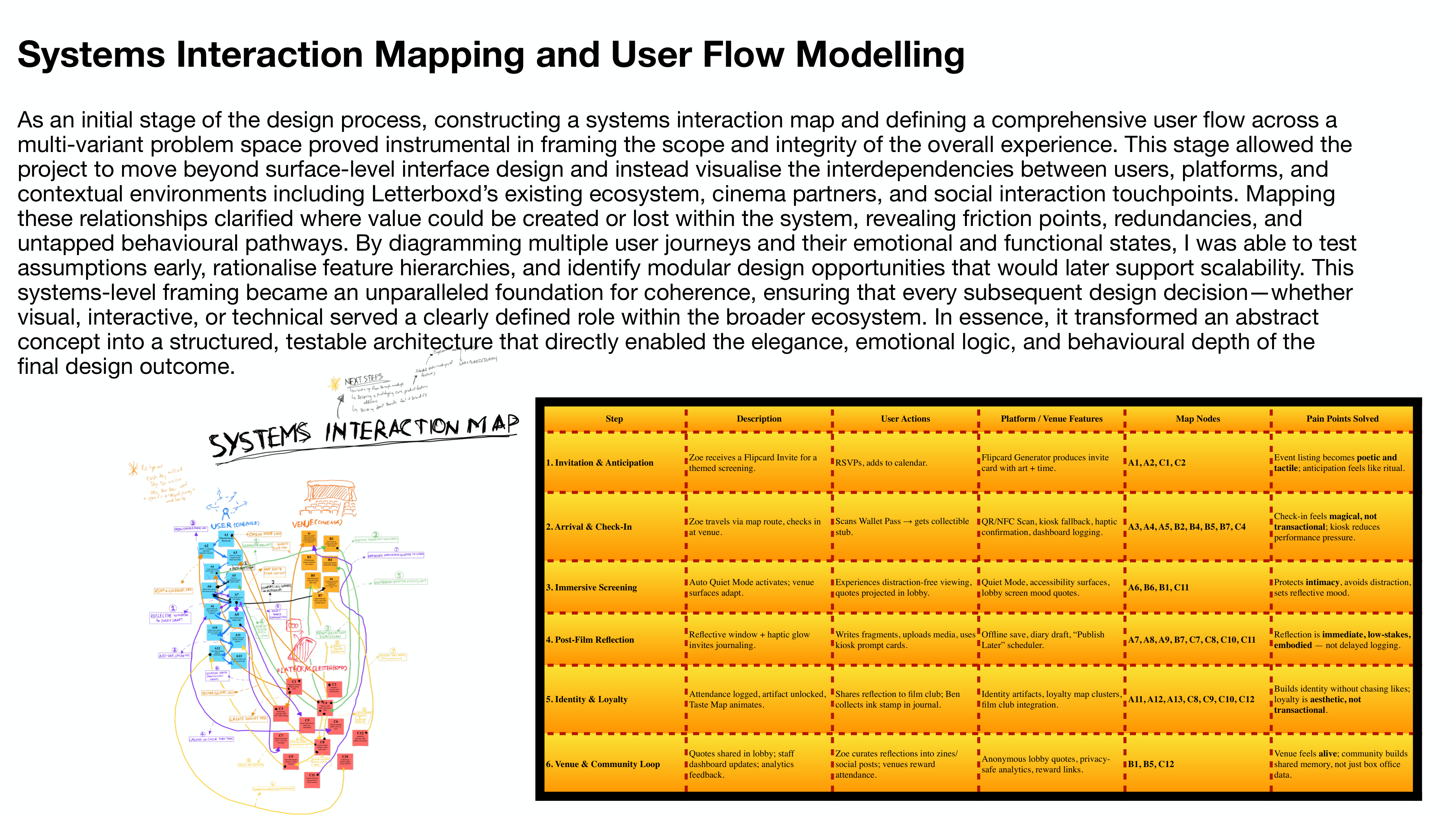
Moving from research to structure, I constructed a comprehensive systems interaction map spanning users, platforms, cinema partners, and social interaction touchpoints. This framing moved the project beyond surface-level interface design and instead visualised the interdependencies across Letterboxd's existing ecosystem.
By diagramming multiple user journeys and their emotional and functional states, I was able to test assumptions early, rationalise feature hierarchies, and identify modular design opportunities that would later support scalability.
Letterboxd Live — Design Brief
The design brief that bridges research insights to design direction — establishing user objectives, psychological objectives, design opportunity, and design vision for the project.
Design Development & Validation
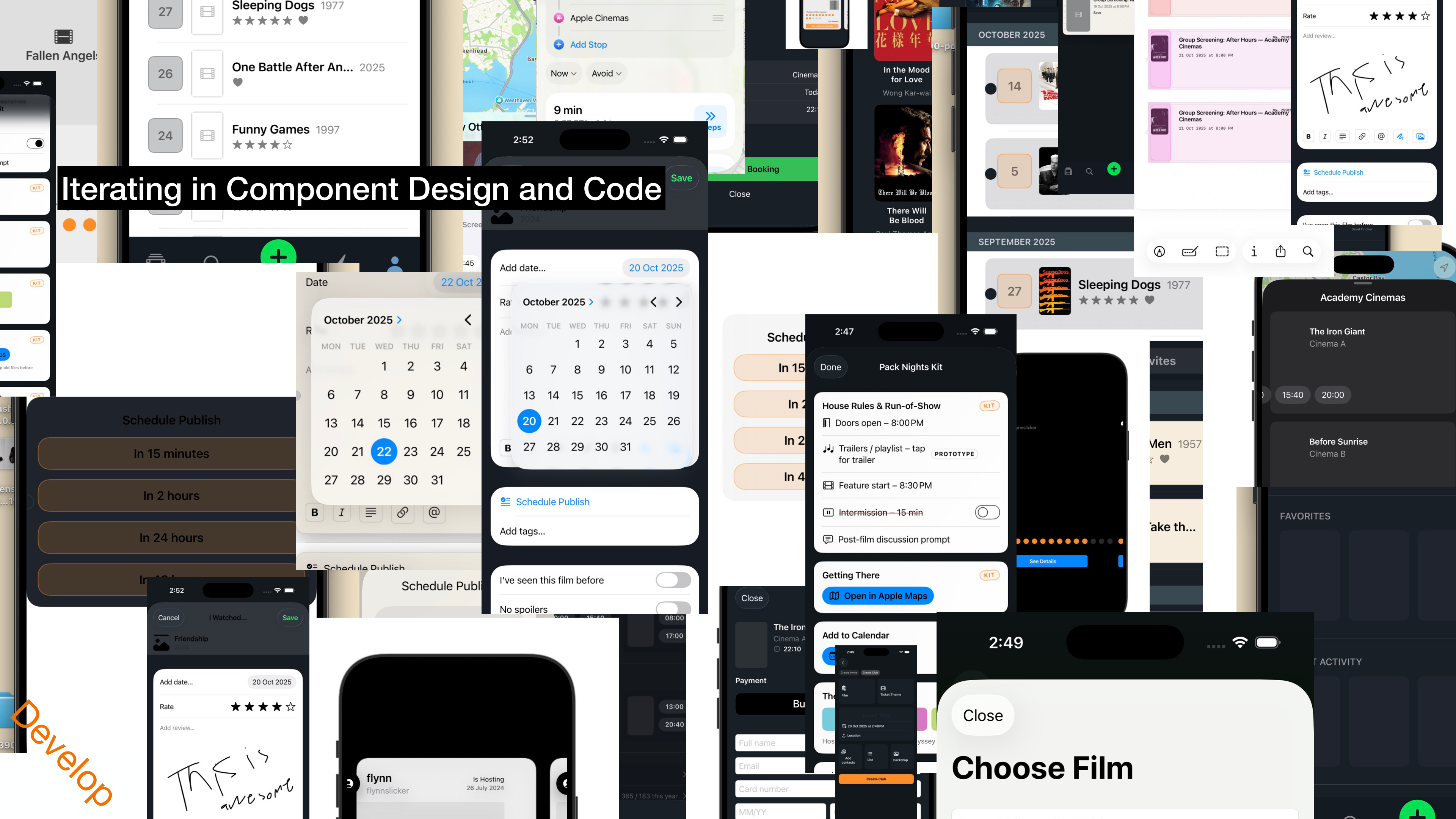
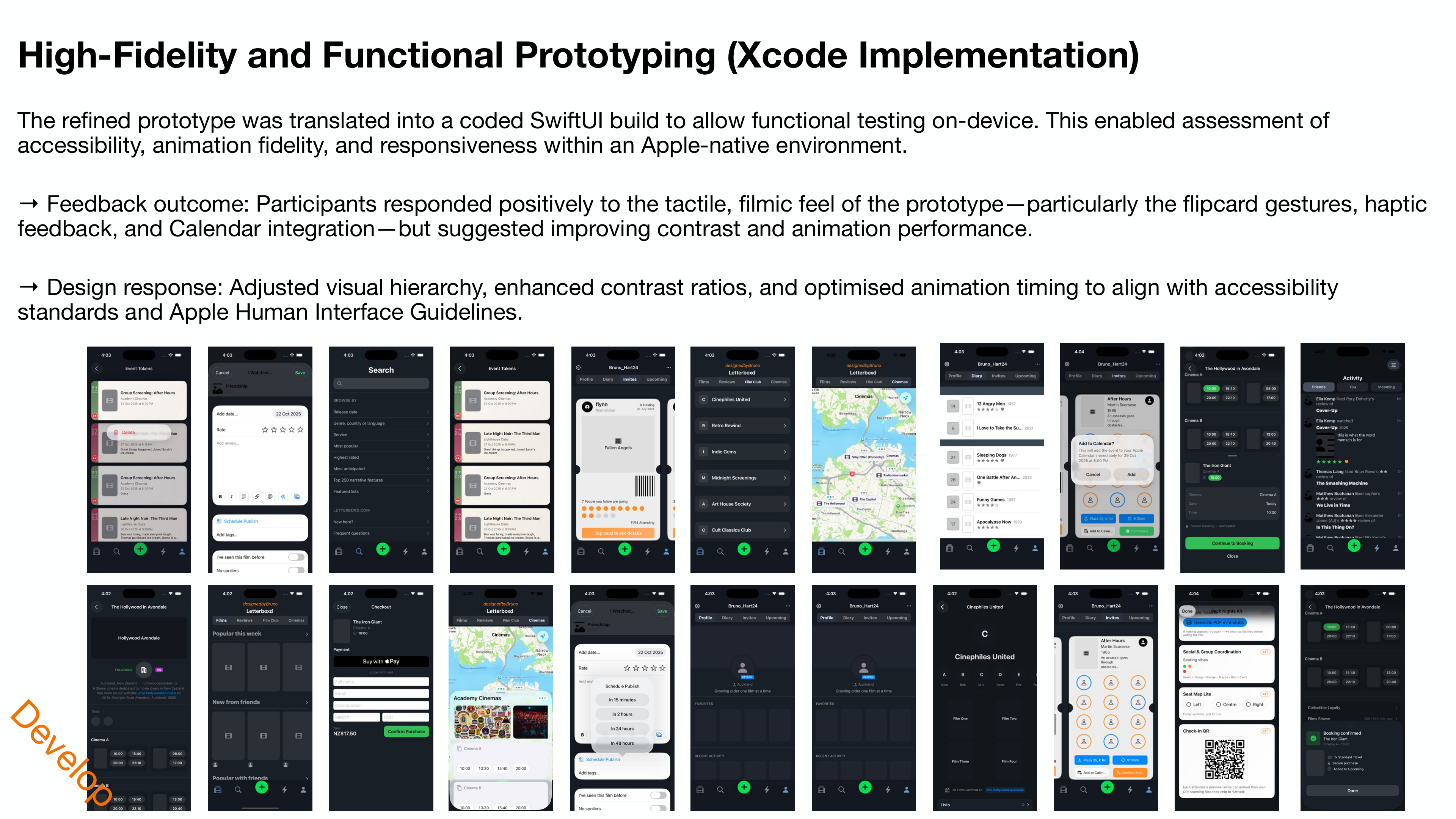
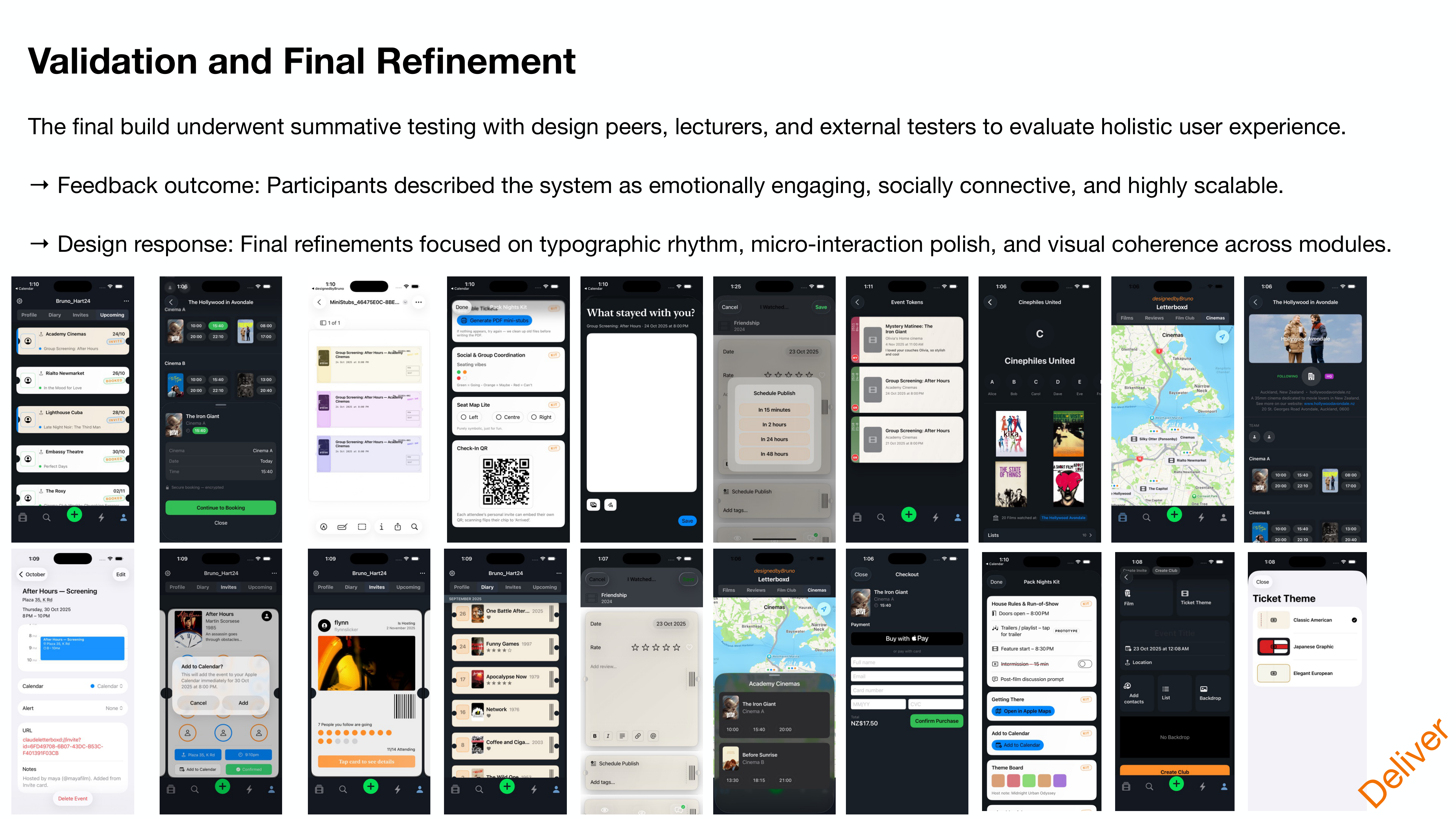
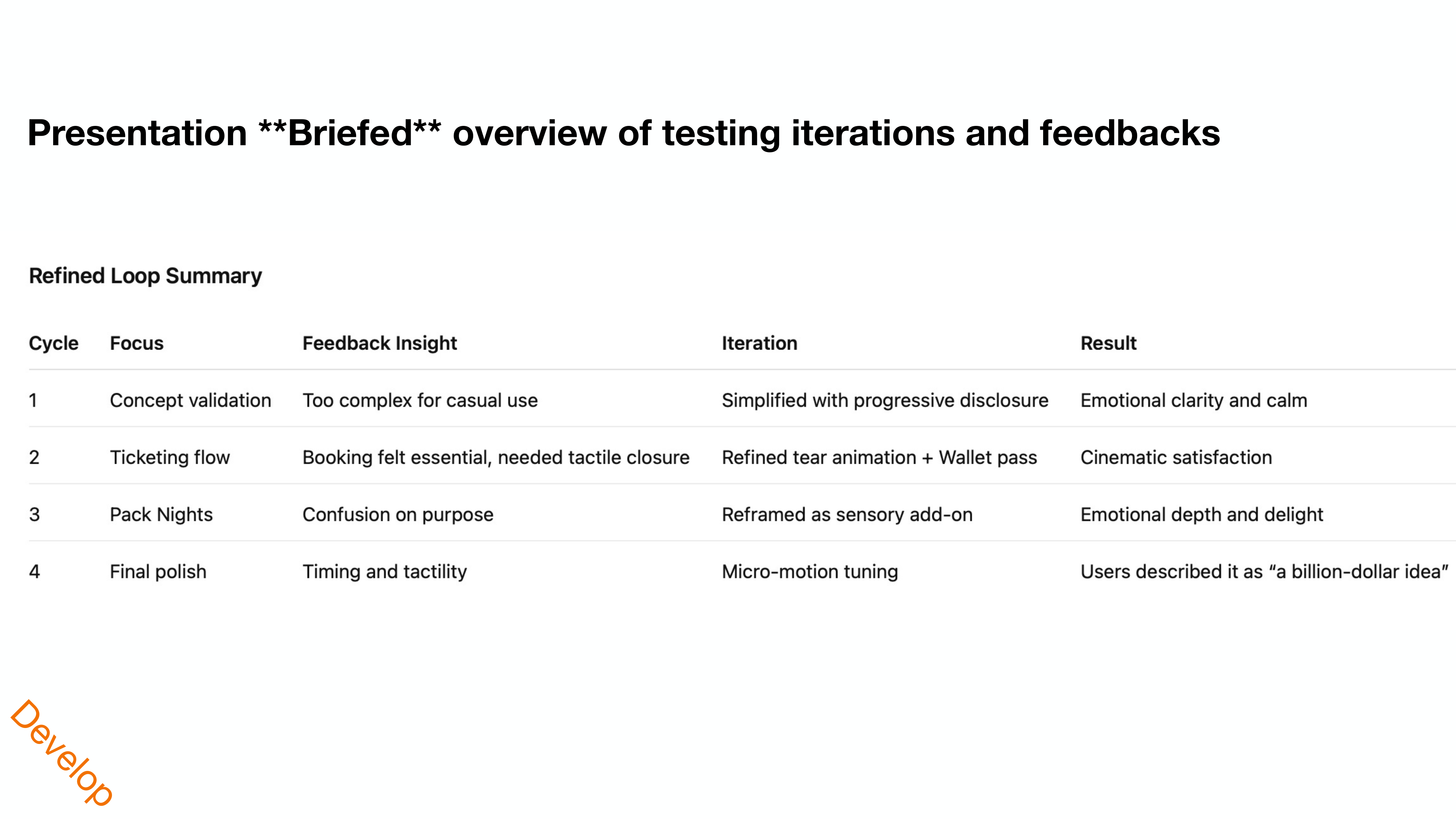
Part 2 transforms research into lived cinematic ritual. Through iterative cycles of sketching, wireframing, prototyping, and user testing with cinema-goers, the project advanced from concept to validated design outcomes.
Using Self-Perception Theory and controlled within- and between-subject experiments, I tested whether the designed features could reinforce cinephile identity, increase brand affection, and motivate real-world cinema attendance — outcomes that show both psychological rigour and practical product impact.
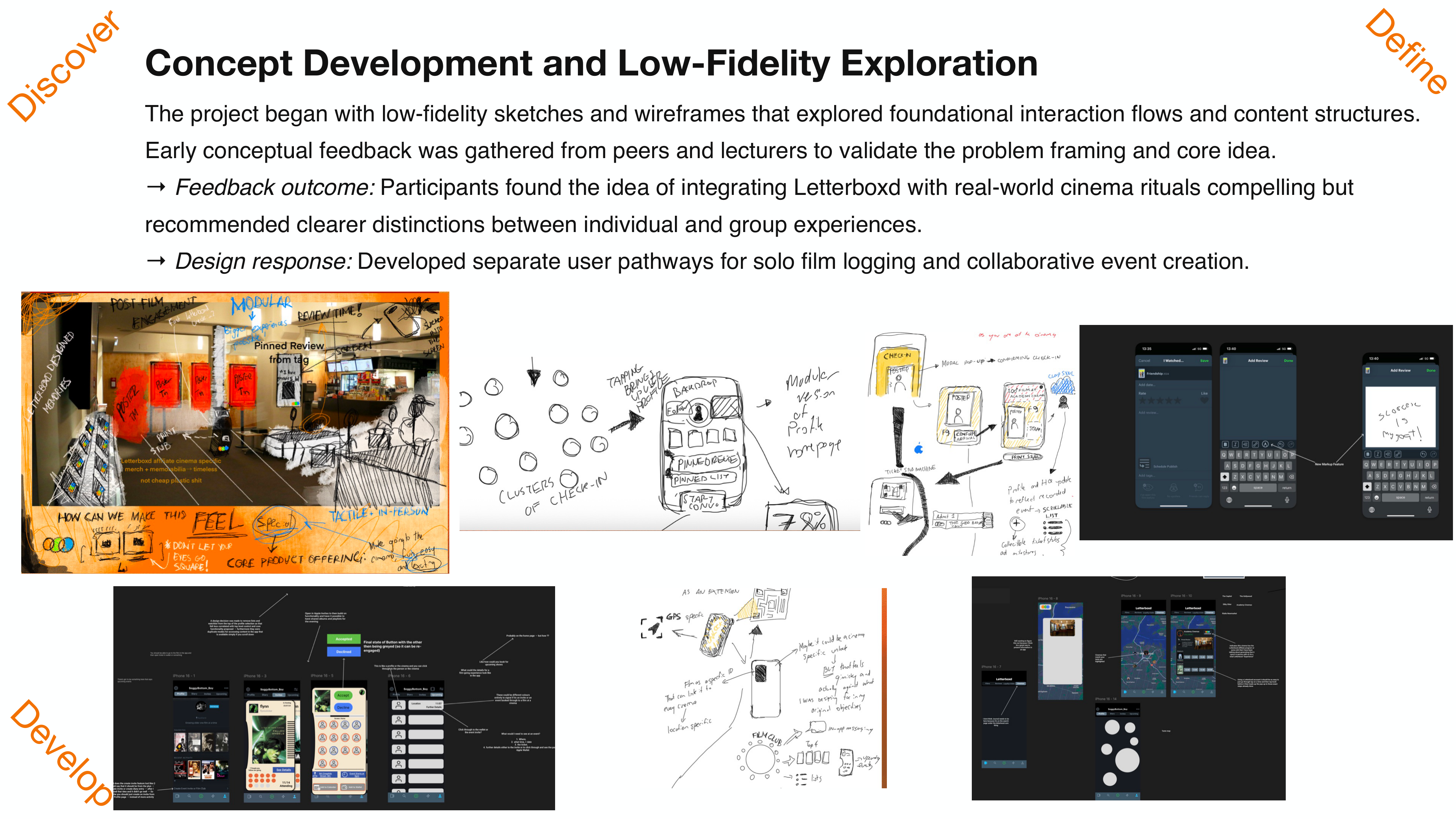
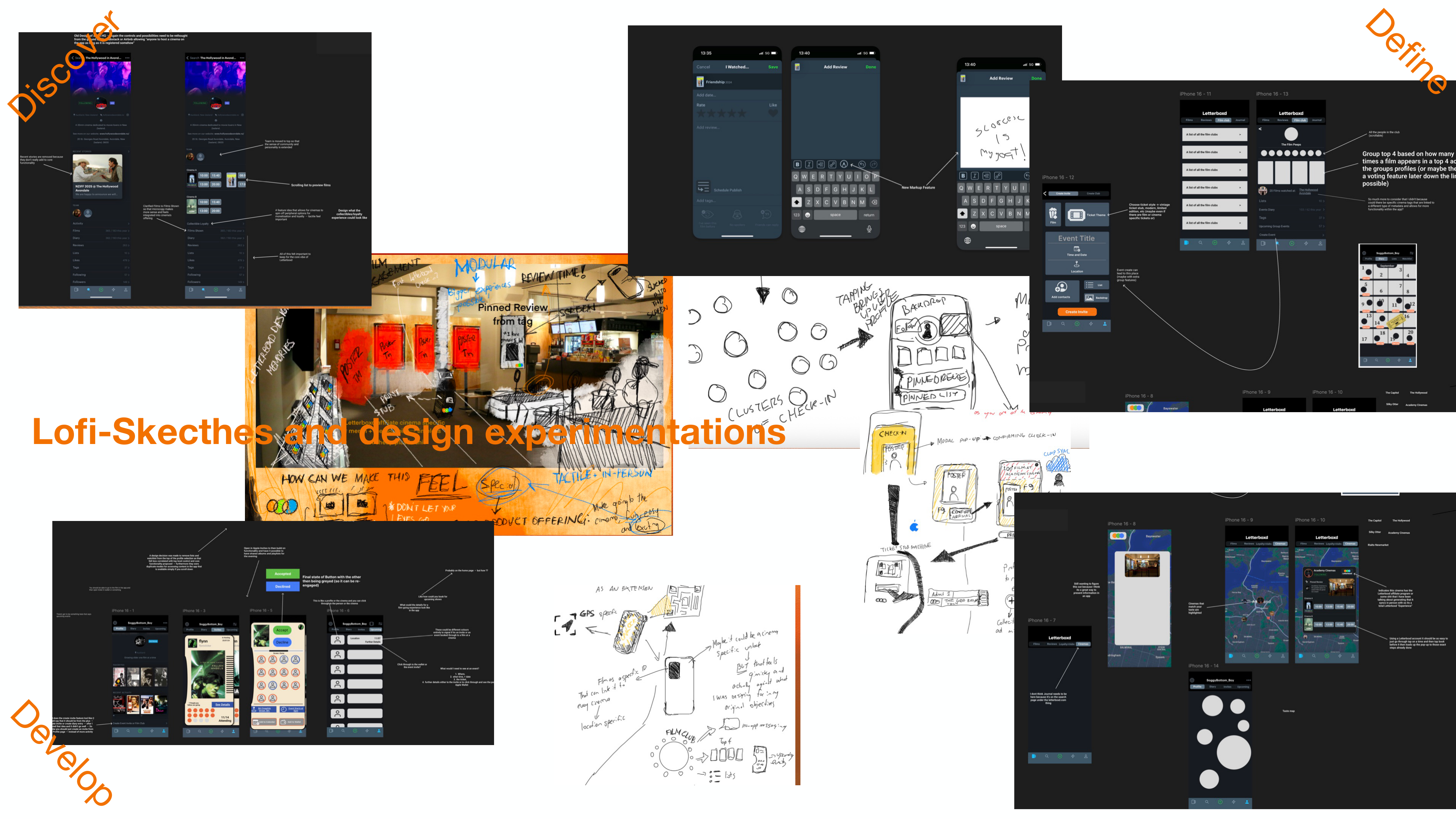
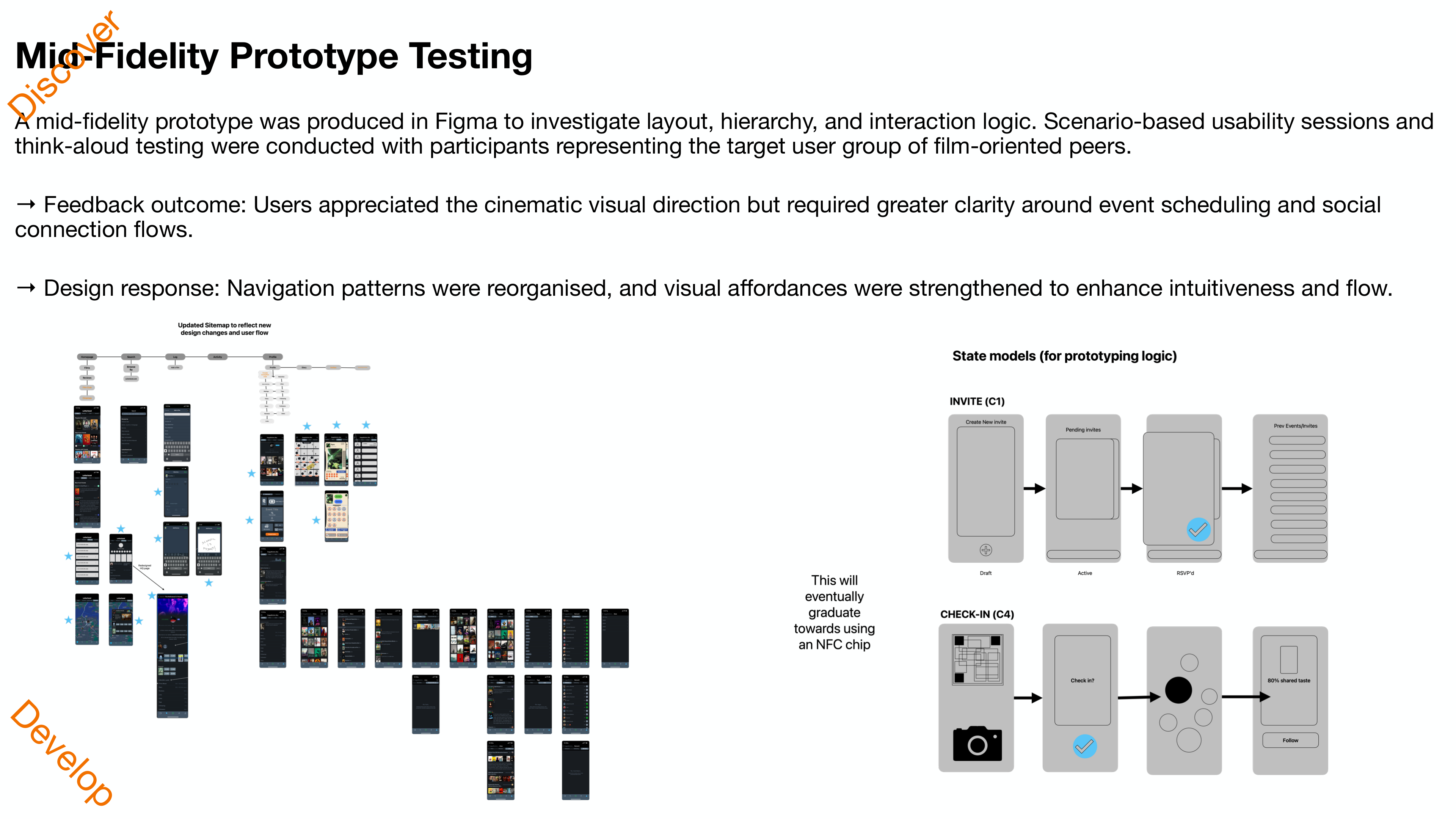
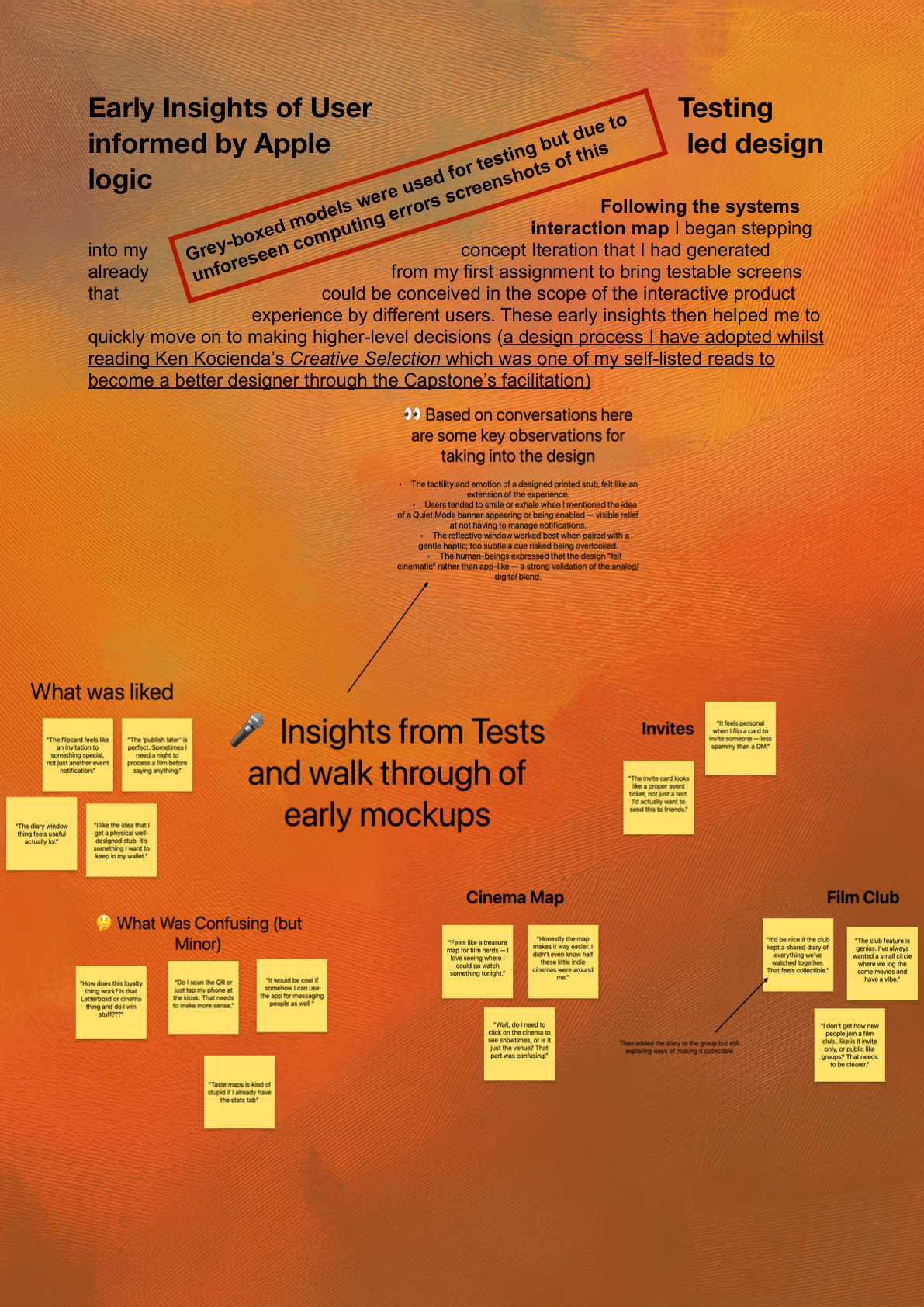
Testing Protocol
The testing protocol included both within-subjects design (same participants tested across features) and between-subjects design (comparing groups with and without SPT-informed features). The tests assessed psychological implications against the design brief objectives:
- Does the feature feel integrated into the total Letterboxd brand and product experience?
- Does the feature improve willingness to engage with the app as a genuine 'social media alternative'?
- Does this increase brand affection for the Letterboxd product?
- Does this feature lead to an increased feeling of belonging/community?
- Does the feature set increase the likelihood of initiating action into regular cinema-going behaviour?
- Does the feature set increase willingness to engage deeper in the film world?
Graphic Design & Visual Identity
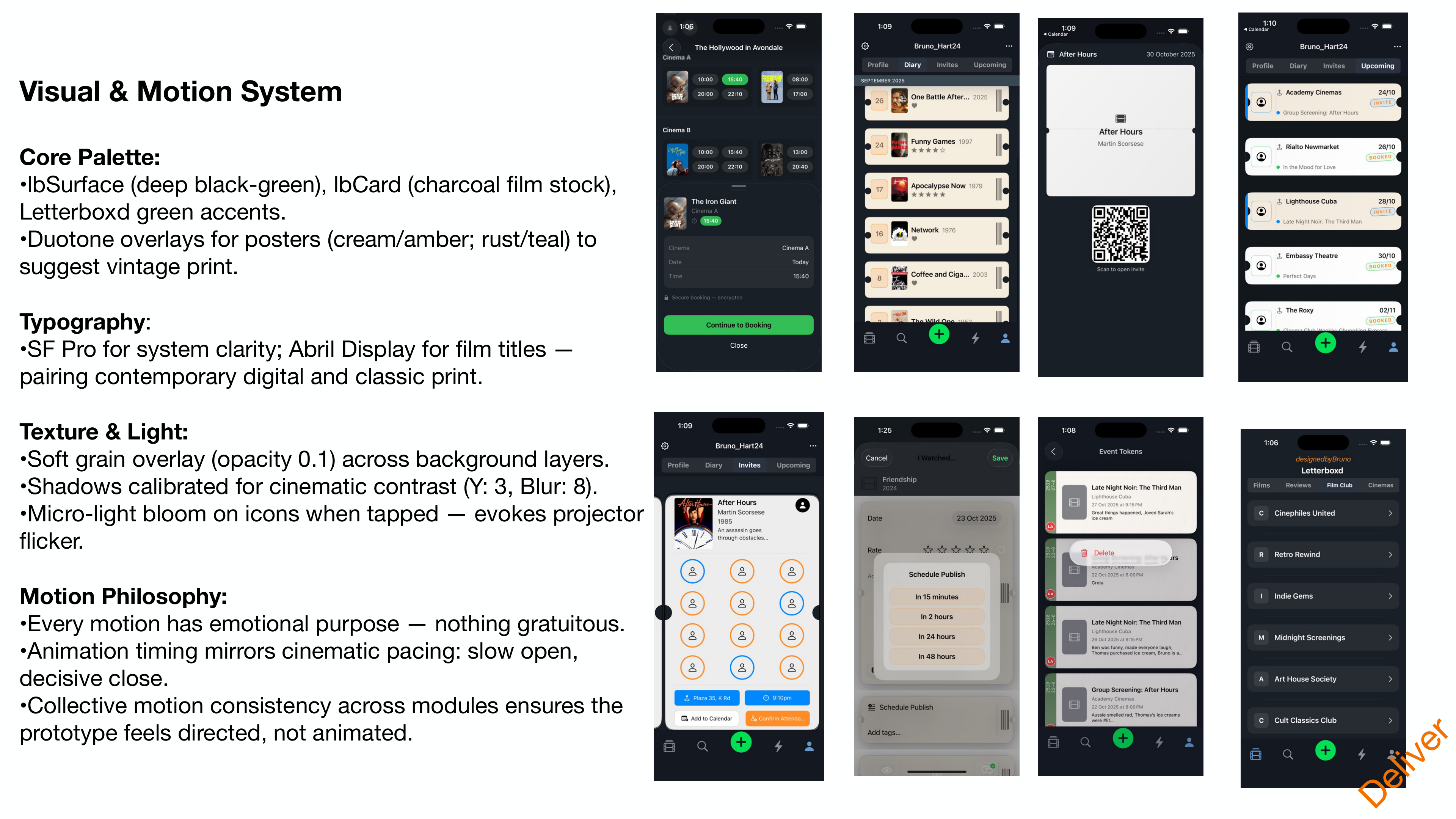
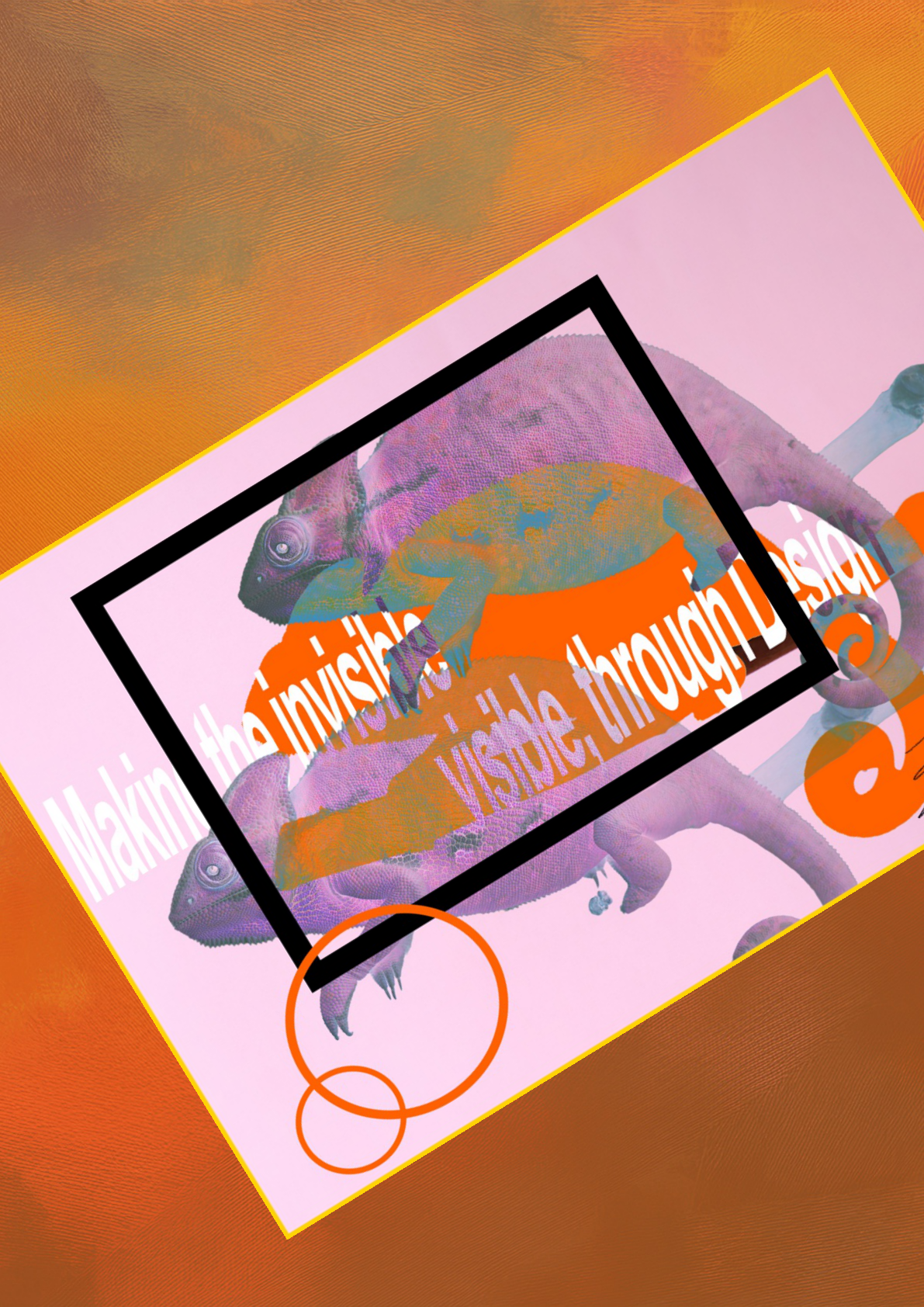
Every element carries the tension between analog warmth and digital precision that defines the project's identity — from the orange-amber painterly cover to the collage-influenced page compositions.

Engineering the System
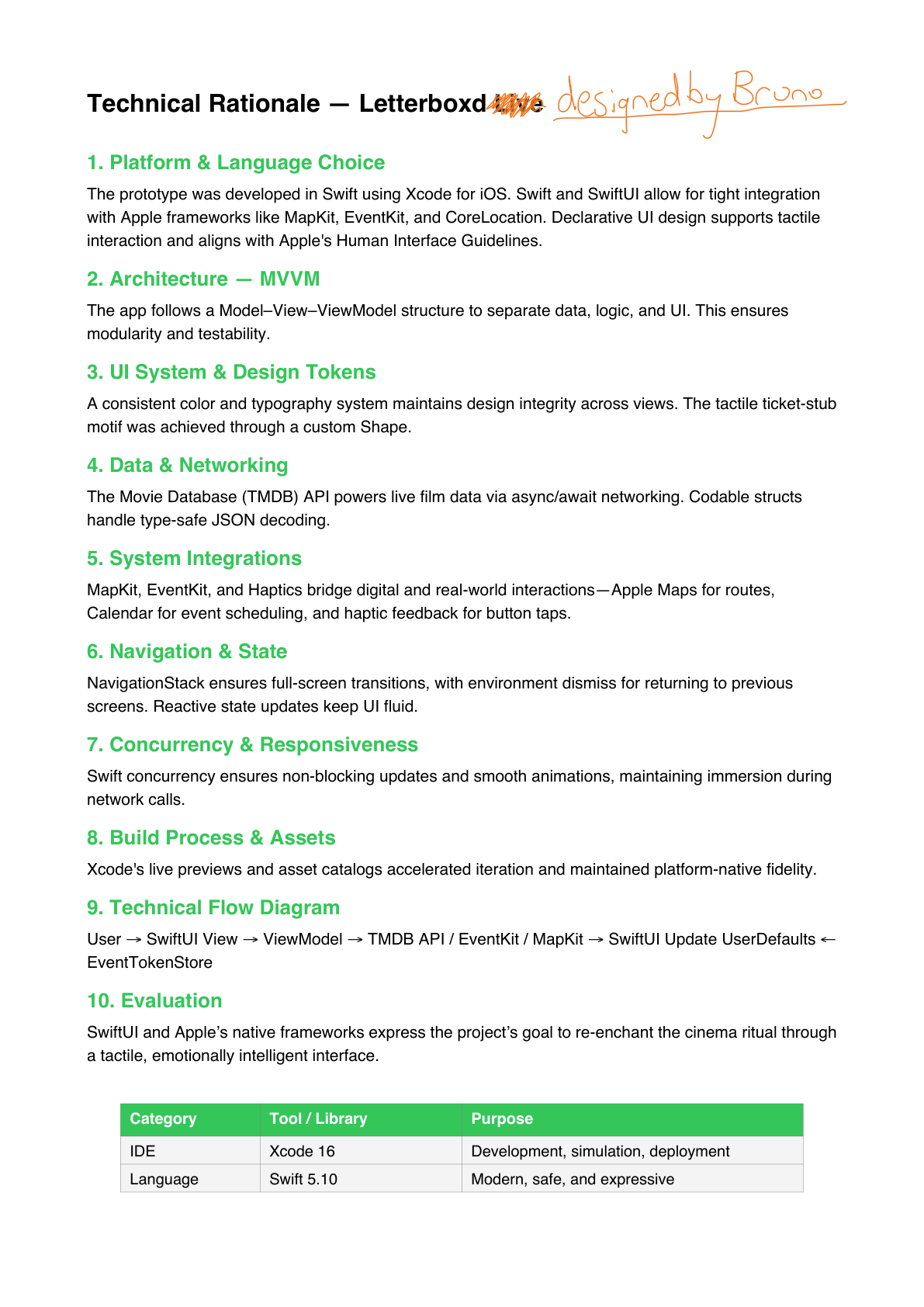
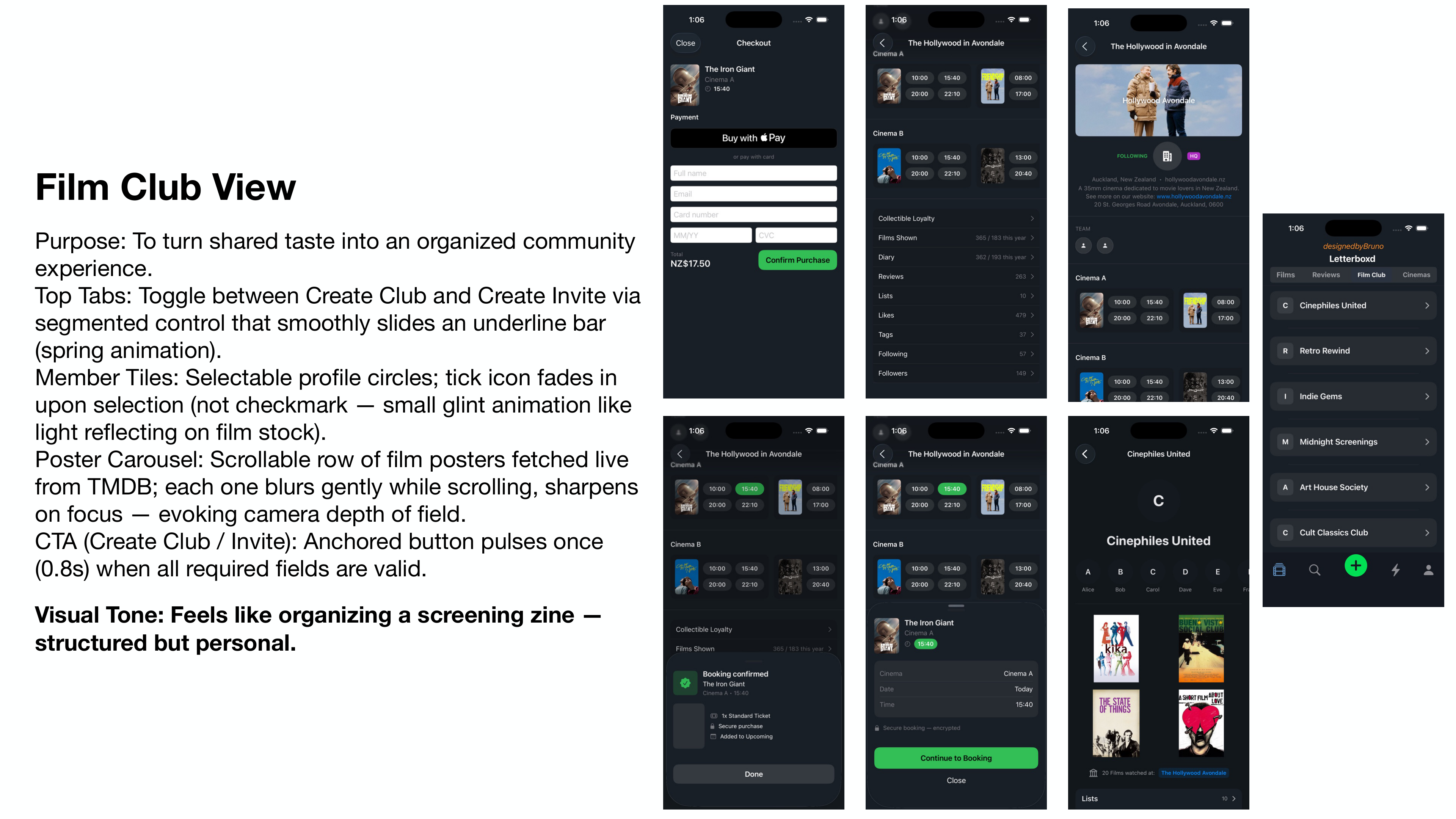
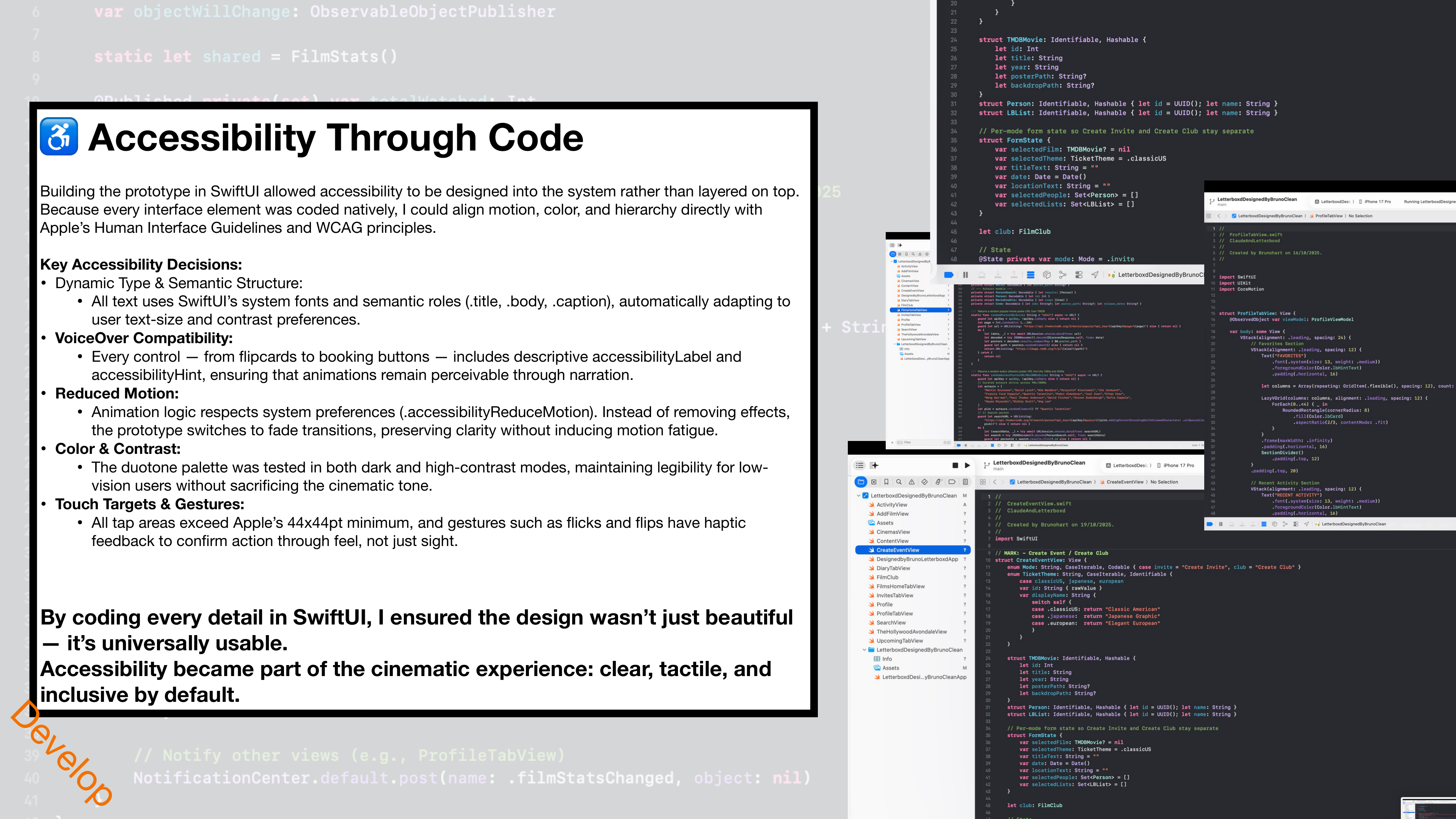
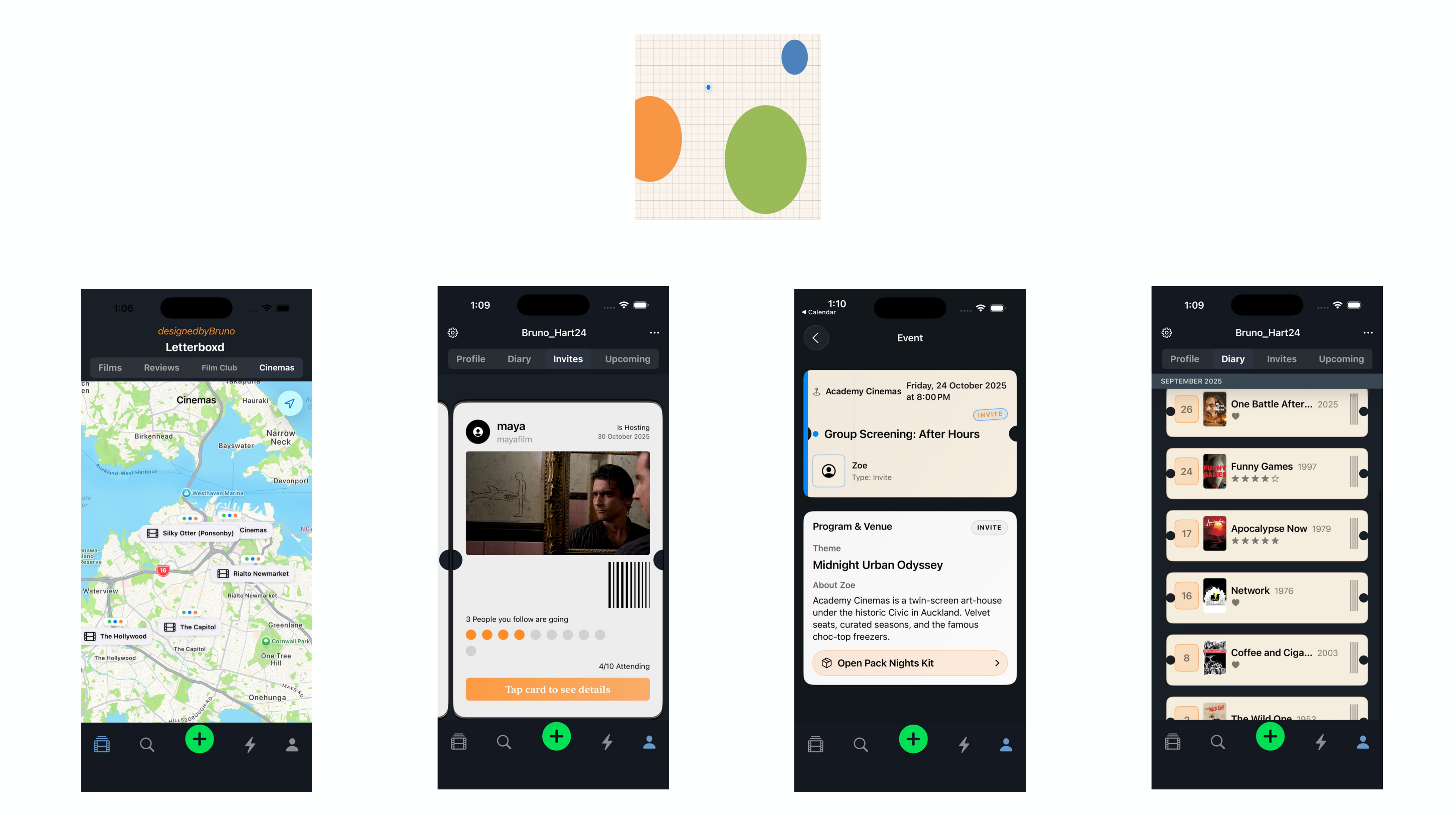
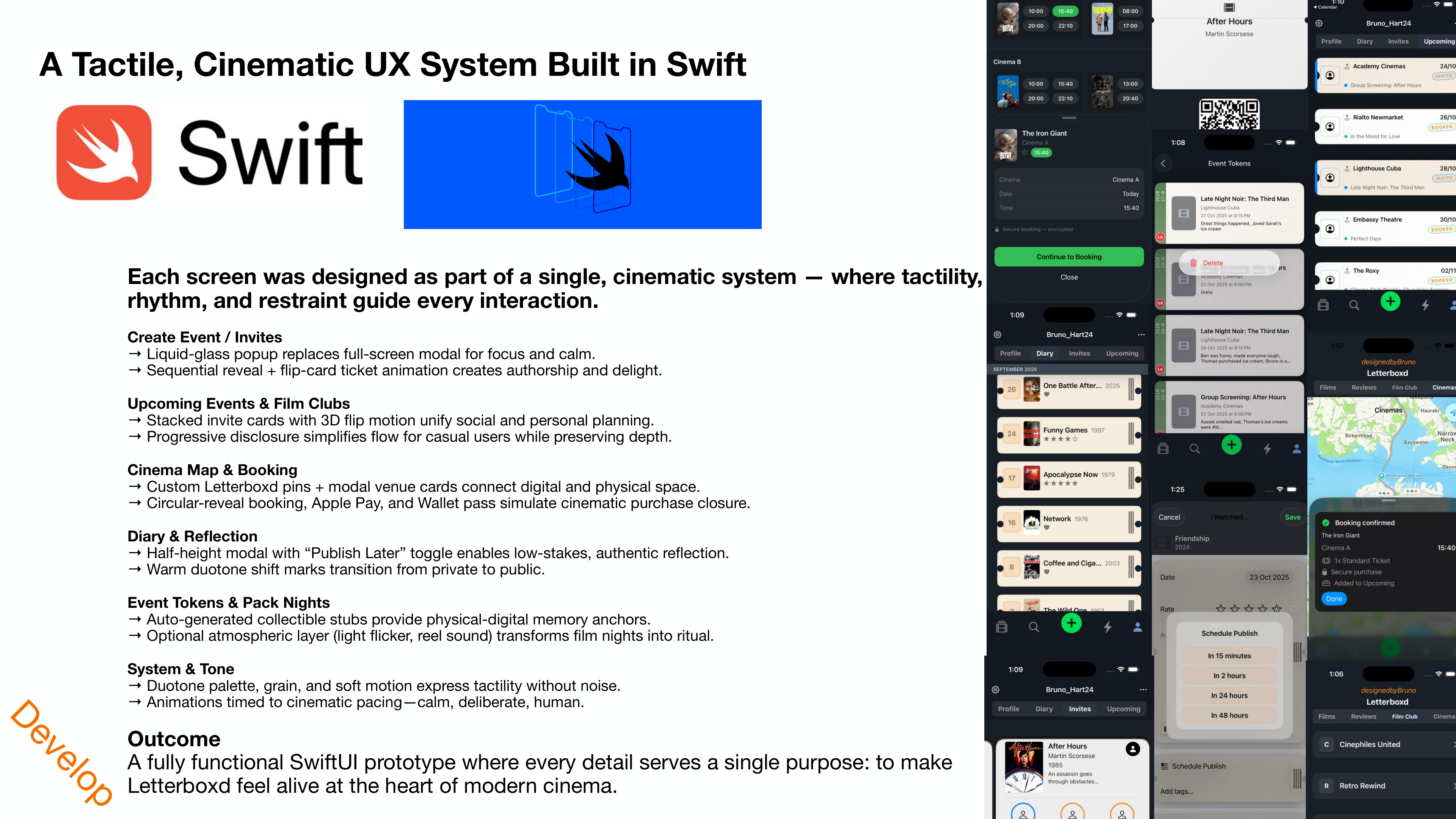
Built with Swift 6, Xcode 16, and the latest SwiftUI framework, the final phase brought the validated design to life as a functional prototype. The app follows an MVVM architecture with a consistent colour and typography system maintained across views through a custom Design Token structure.
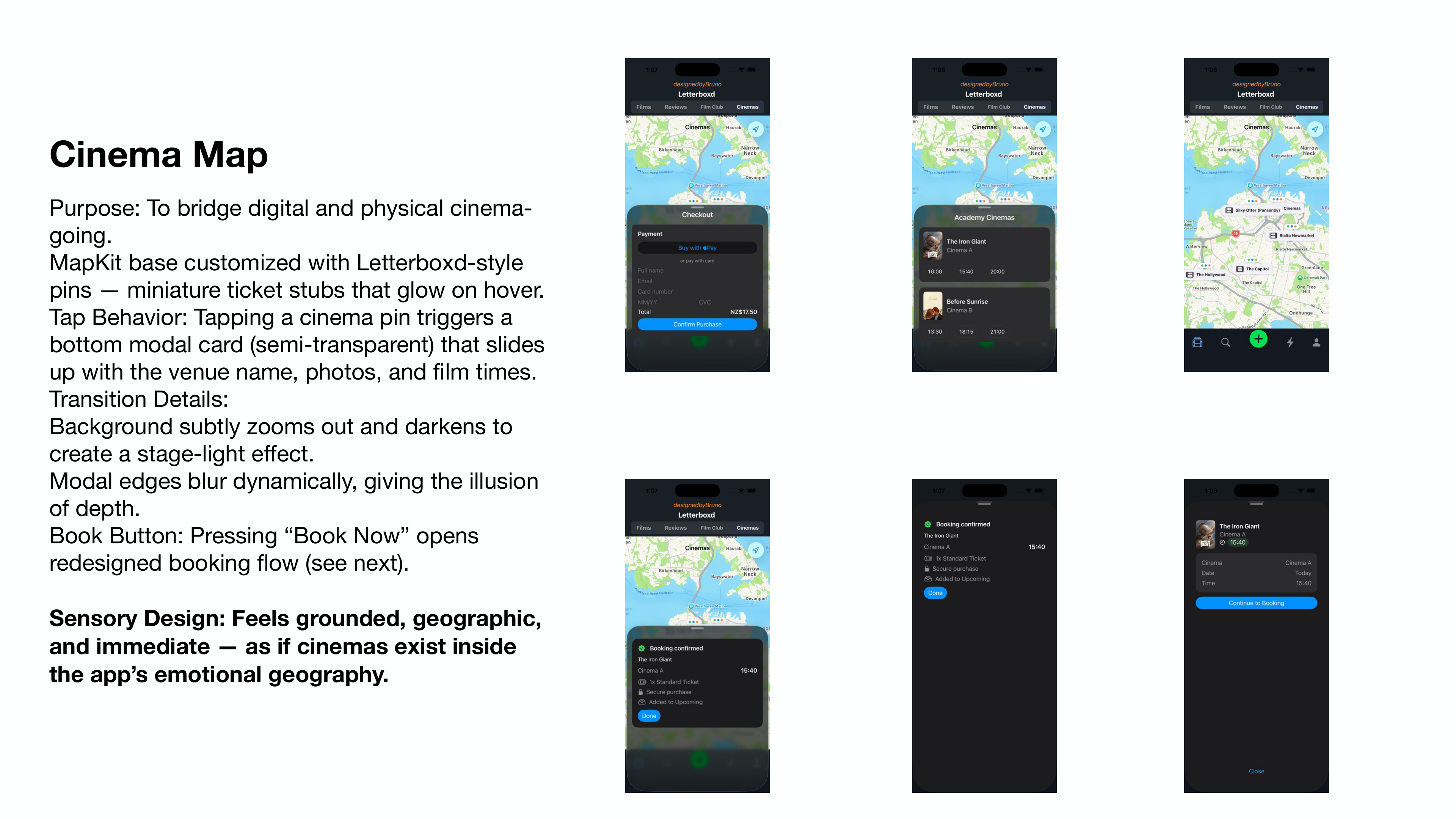
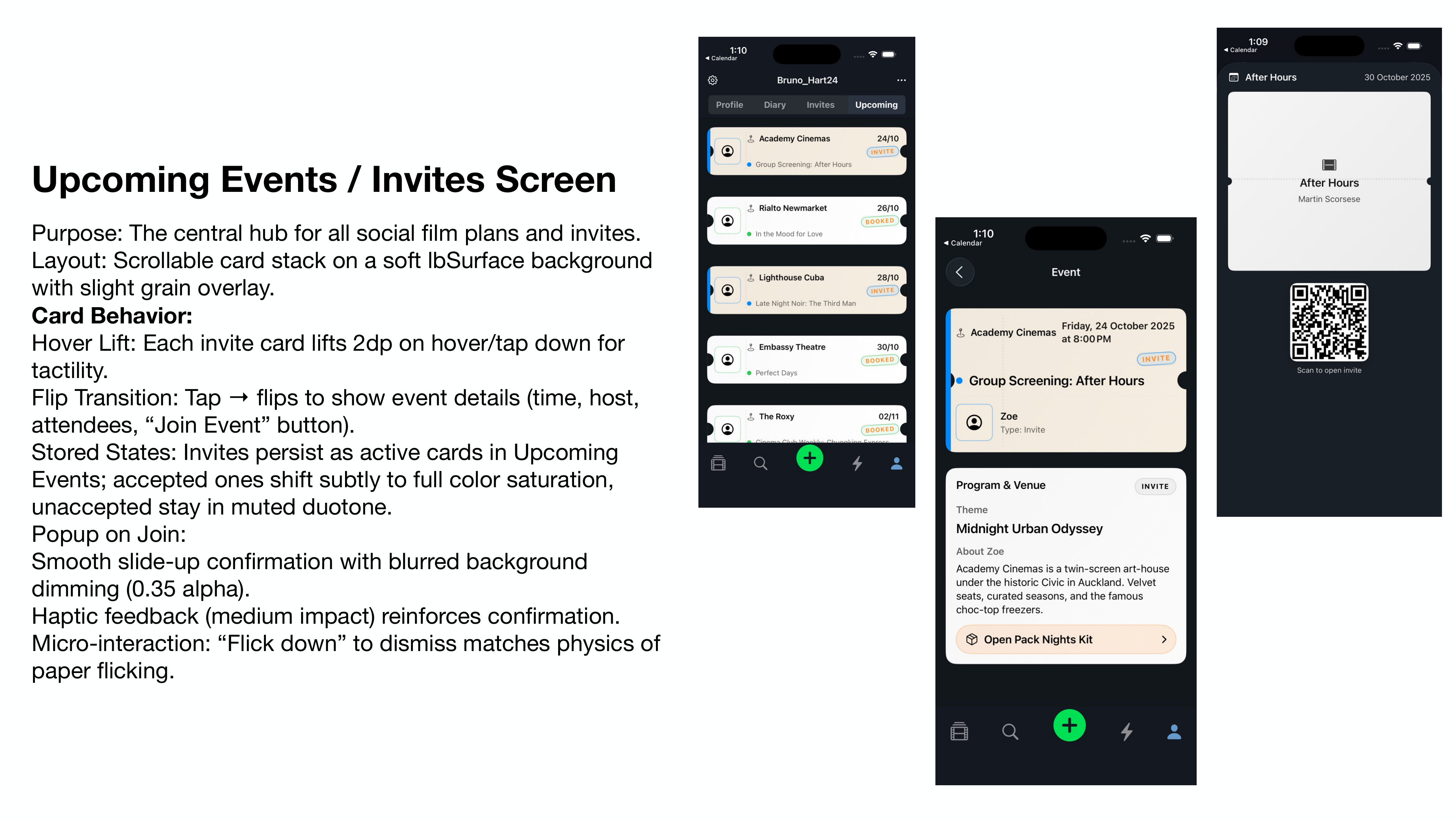
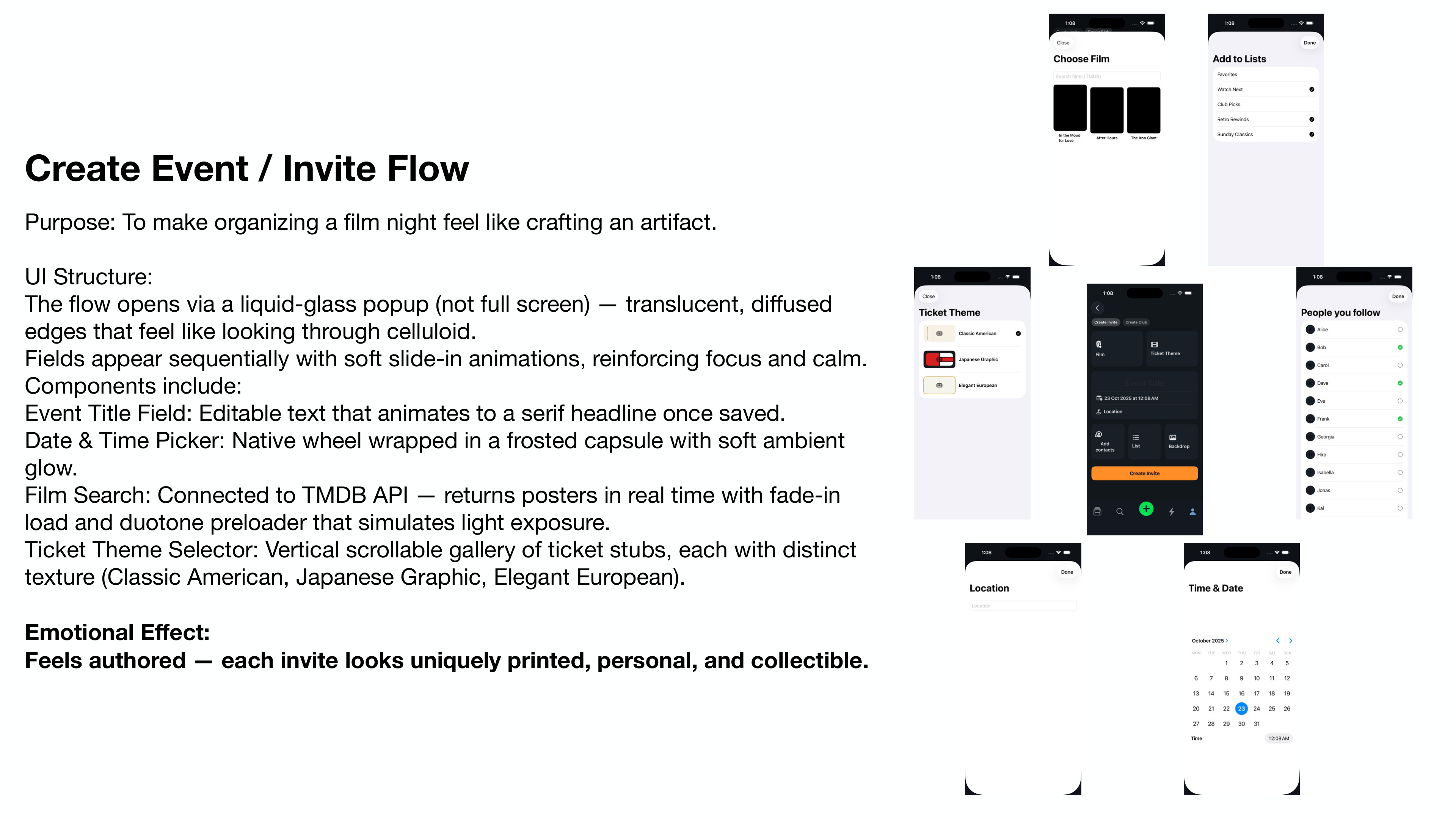
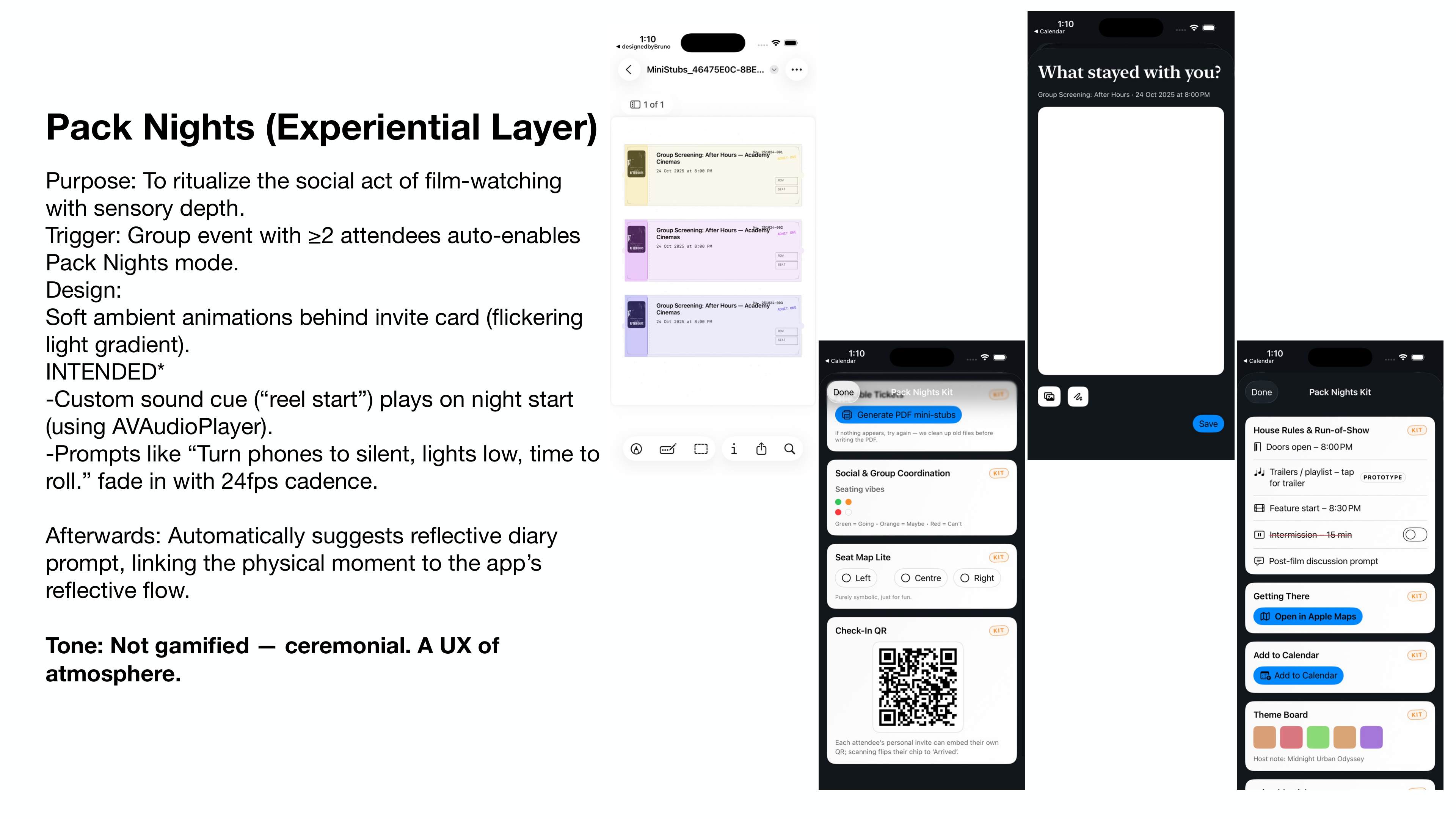
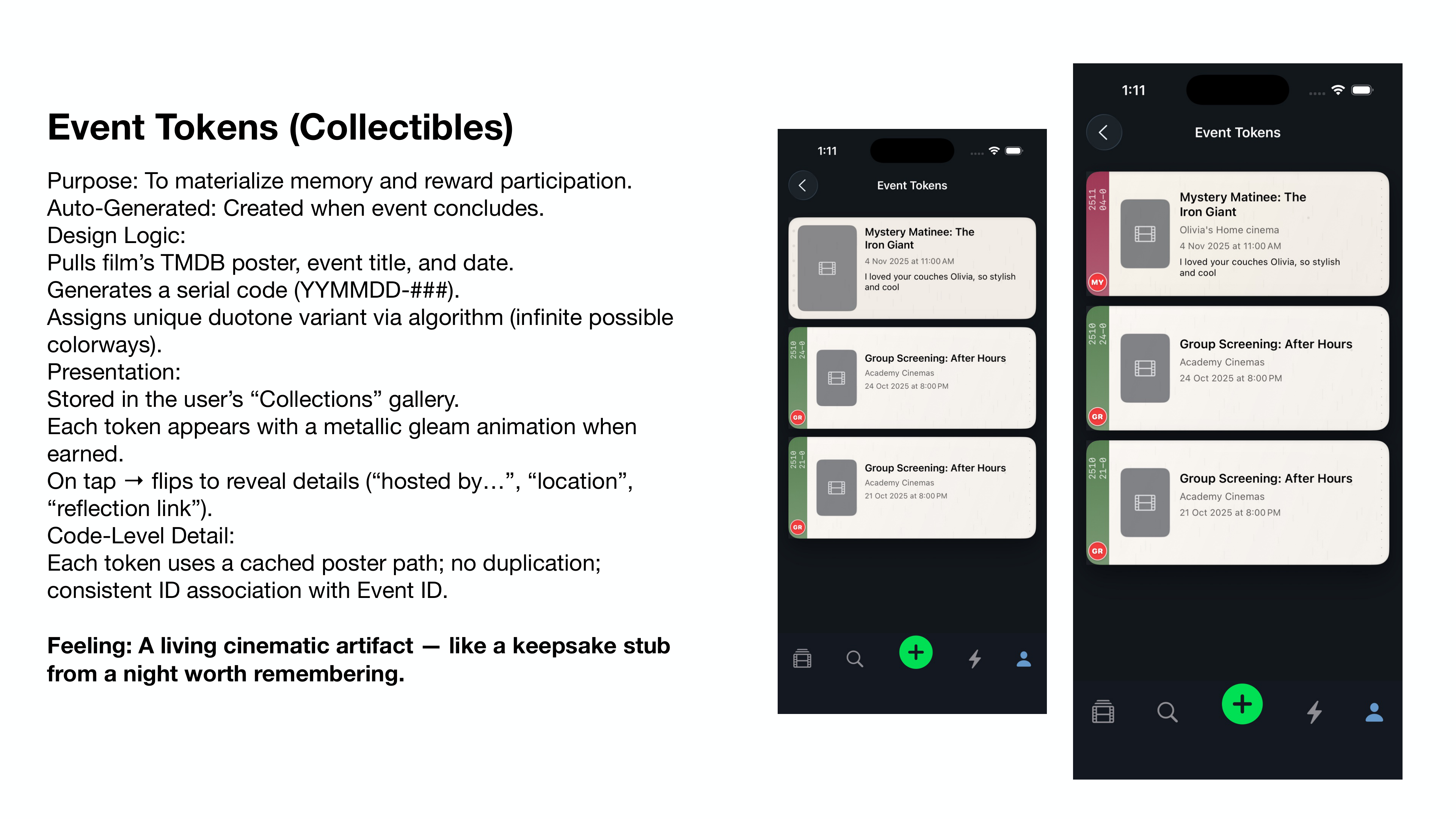
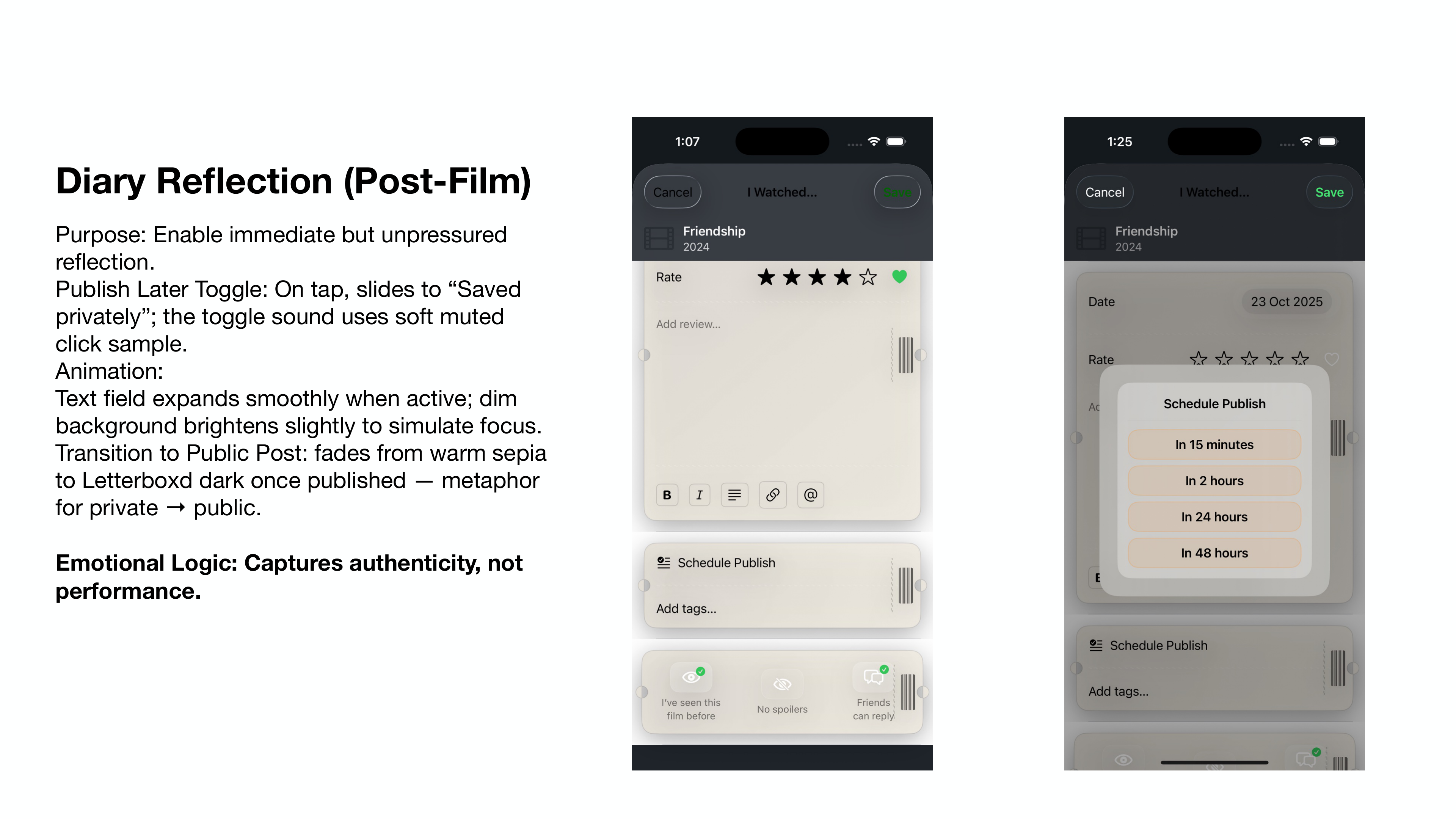
The prototype demonstrates the full interaction model — from discovering screenings on the Cinema Map to hosting intimate film gatherings through tactile invite craftsmanship, to logging reflections in a redesigned diary experience.
Technical Architecture
The MVVM pattern separates data, logic, and UI for modularity and testability. The Movie Database (TMDB) API powers live film data via async/await networking, while Apple's native frameworks bridge digital and real-world interactions.